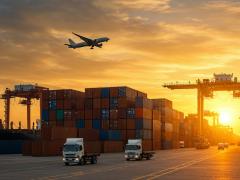
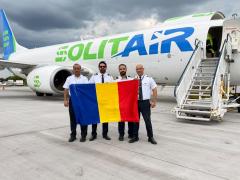
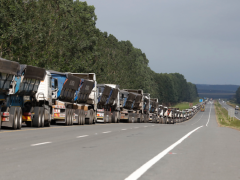
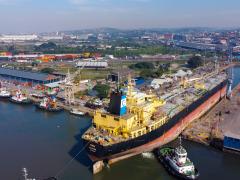
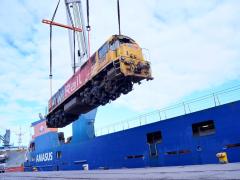
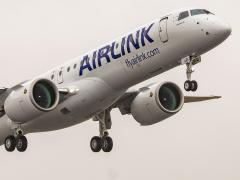
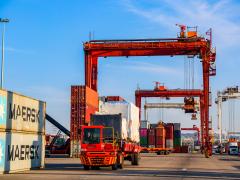
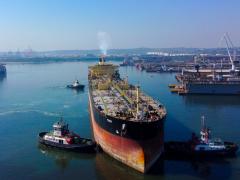
There’s a growing increase in cargo traditionally sent by air switching to sea, as shippers focus on that mode’s lower costs, according to freight forwarders in SA and in Europe. This is tending to be the heavier cargo types – particularly hi-tech and telecoms equipment – and is a trend that is expected to continue over the coming years. “It makes a lot of sense in view of the airfreight capacity problem into SA,” said Sue Wood, operations director of Cargocare Freight Services. “All carriers are taking a strain on profitability, and taking capacity out of the market to try to overcome this.” On the seafreight side, lower cost is the main driver. DHL Global Forwarding CEO Roger Crook said the switch was the result of a price difference of 10 times between the two modes of transport. He added: “Obviously many companies are under cost pressure and looking to reduce total supply chain costs. Therefore, they are buying and moving by ocean freight, and particularly it is happening in the technology sector.” Wood agreed with this philosophy. “The carriers out of the Far East are dropping their rates like crazy because of the problems of overcapacity and low volumes. It’s the same in Europe. They are buying very good rates from seafreight.” Richard Mallabone, MD of Seko Logistics, also confirmed an air-sea switch on the SA trades. His own company records also display that, especially since sea carriers started accommodating just-in-time (JIT) cargoes. “They are now offering the guaranteed loading that you want, instead of often leaving containers in the stack waiting for the next sailing,” he said. “Even with co-loaders we are seeing a bigger swing to ocean.” Although the Bidfreight records actually show an increase in airfreight in the last year, CEO Anthony Dawe accepted that certain of the electronic cargo types had moved from air, where weight dictates prices. “The bulkier items like printers have been switched to sea,” he told FTW, “but other, smaller, high-value items, like cell phones and pharmaceuticals, still go by air. And, with gold, precious stones and currency, you’ll never see a switch.” But, Dawe warned, any airfreight trends in SA were hardly likely to register on the global figures. “We’re a very small market, and, even if all the cargo that travels by air were to move to seafreight, you can bet it wouldn’t fill too many containers.” The trend, though, is still apparent on a global basis, according to Panalpina’s Europe-based chief operating officer, Karl Weyeneth. He expected the trend to continue, but was quoted as saying: “There is a maximum shift you can achieve, depending on what industry you are talking about. “But I believe that now that supply chains are used to working with more ocean freight, this impact will stay for at least a couple of years, until the economy has really recovered, then it will start to shift back again. “We really see this as an important factor in our market for the next two to three years.” CAPTION 1 Sue Wood...‘Makes a lot of sense in view of the airfreight capacity problem into SA. CAPTION 2 Richard Mallabone...‘Sea carriers are now offering the guaranteed loading that you want.’
Airfreight continues losing business to sea
Comments | 0
© Now Media. This content is protected by copyright and may not be adapted or republished. If you would like to discuss cooperation opportunities, please contact: editor@freightnews.co.za.