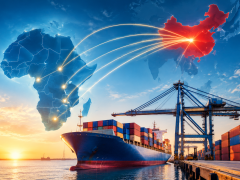
While the African National Congress is potentially spooking mining investors in South Africa with continuing talk of nationalisation, other countries on the continent are busy unravelling legislation and regulations. Steps include reducing or doing away with statutory government ownership quotas, lowering taxes and passing new mining legislation. Exploration and the opening up of mines is good news for the freight industry, which benefits from the start of the process through the importation and transport of drilling equipment, laboratories and staff accommodation, through to the production phase when product is exported and spares for the mines imported. Countries that have reduced tax include Namibia, which has lowered corporate tax for mining companies, and Zambia, which has scrapped its 25% windfall taxes on mining. Announcing the move in 2009, finance and national planning minister Situmbeko Musokotwane said the government had also allowed hedging income to be a part of the mining income for tax purposes and increased capital allowance to 100% as an investment incentive. Botswana – often cited by the African National Congress Youth League as an example of nationalisation – has in fact reduced government ownership requirements. According to the Botswana Export Development and Investment Agency, moves to attract investment have seen “the abolition of the government’s right to a 15% free equity participation in all new mining projects, replaced by an option to acquire up to a 15% shareholding on mutually agreed commercial terms”. Mozambique adopted a new mining code in 2002, and revised the regulations in 2006 to allow both foreigners and nationals to engage in prospecting activities and obtain mining concessions. With the exception of salt mining, mining and quarrying activities are subject to a low tariff of 2.5%. The country is now on the brink of a mining boom, which will see the development of ports, road and rail infrastructure. Farther afield, Eritrea has published new legal guidelines on the mining and minerals sectors which make concessions to foreign investors, while retaining the right of state ownership over resources. Eritrea’s mining law gives the government a minimum of 10% free stake in any mine, without having to fund exploration costs. It also holds an option to add another 20% at market prices for a maximum 30% stake (the ANC Youth League wants a minimum 60%), but the government must contribute to exploration costs. Eritrean incentives include a low income tax rate of 38%, low royalties of 2-5%, nominal (0.5%) duties on capital goods, and the right to dispose of minerals locally. This has drawn big-name gold miners such as AngloGold Ashanti and Newmont Mining, both of which are exploring for gold in Eritrea and Egypt on a promising geological belt known as the Arabian-Nubian Shield. The shield encircles the Red Sea and runs along the coastal sides of countries bordering it: Egypt, Sudan, Eritrea, Ethiopia, Saudi Arabia, Yemen, Jordan and Israel. There is hope that the gold will boost the economies of Eritrea and Egypt, as it has done in West Africa, where countries such as Mali and Burkina Faso have become popular investment destinations for miners. The region’s gold output doubled in the 10 years to 2008, and there are regular discoveries of deposits of one million troy ounces, according to UK investment bank Ambrian Capital. In 2003, Mali revised its mining code in order to attract more investors, while Burkina Faso started revising its regulations in 1997. In contrast, Bloomberg reported in August that Anglo American and Lonmin, who employ 100 000 people in South Africa, say the government has deprived them of mine rights, threatening investment and job creation in the country’s biggest export industry. For the freight industry, this means rediscovering the African “hinterland” and ensuring that it has the people, systems and infrastructure needed to replicate South Africa’s mining successes throughout the rest of the continent.
African states moving away from nationalisation
Comments | 0
© Now Media. This content is protected by copyright and may not be adapted or republished. If you would like to discuss cooperation opportunities, please contact: editor@freightnews.co.za.