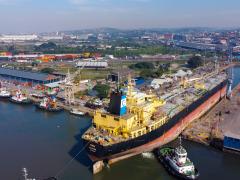
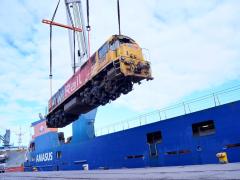
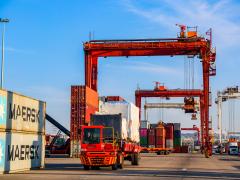
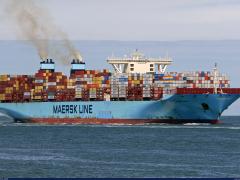
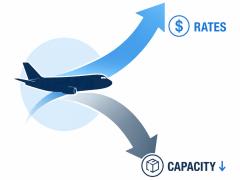
The price of steel is 30% higher in Ethiopia than in China due to poor trade logistics and high import tariffs. That pretty much sums up the challenges facing manufacturers across Africa. Logistics costs are pricing manufactured goods out of the market. But, the continent needs to industrialise – or reindustrialise – in order to create millions of jobs for its youth. About 40% of the African population is under 15, and nearly 70% is under 30 – creating a so-called “youth bulge” in the population mix. “If the increase in the number of working age individuals can be fully employed in productive activities, other things being equal, the level of average income per capita should increase as a result. The youth bulge will become a demographic dividend,” says Justin Lin, former World Bank chief economist and senior vice president. There is a downside: “If a large cohort of young people cannot find employment and earn satisfactory income, the youth bulge will become a demographic bomb because a large mass of frustrated youth is likely to become a potential source of social and political instability.” Logistics is one of the key sectors to be addressed if Africa is to bank its youth bulge dividend. According to “Light Manufacturing in Africa,” a report from the World Bank and the French Development Agency, good trade logistics connect low-income countries to global output and input markets. It says both China and Vietnam have built their export sectors on the back of very good trade logistics. Establishing industrial export zones next to efficient ports greatly aided their efforts to expand the sale of manufactures to overseas markets. “But in Africa poor trade logistics increases production costs (in most cases wiping out the labour cost advantage) and leads to long and unreliable delivery times, which make it extremely difficult for firms to fill justin- time orders. “Therefore, global buyers are hesitant to place large orders.” Manufacturers in Africa are not protected by the high costs of import logistics because inputs for the products usually need to be imported. The cost to export and import per container ranges from US$500 in China to US$645 in Vietnam. But it can be as high as US$1 200 for exports in Tanzania and US$3 000 for imports in Ethiopia or Zambia. The time to import and export is “at least twice as long for Ethiopia and Zambia as it is for China and Vietnam. “Indeed, the cost of importing low volumes of many different types of inputs may exceed the cost of importing the final good. Studies have shown that most African countries are below the global “efficient frontier” for apparel production, as defined by the cost of logistics and labour, although Madagascar and Ethiopia are not too far from it,” says the report. The benefits of reducing logistics costs can be seen in Vietnam, which has a population similar to that of Ethiopia. It created 600 000 productive jobs in the leather products sector by implementing policies that reduced the cost of doing business. CAPTION Poor trade logistics lead to long and unreliable delivery times, which make it extremely difficult for firms to fill justin- time orders.
Africa priced out of the market
Comments | 0
© Now Media. This content is protected by copyright and may not be adapted or republished. If you would like to discuss cooperation opportunities, please contact: editor@freightnews.co.za.