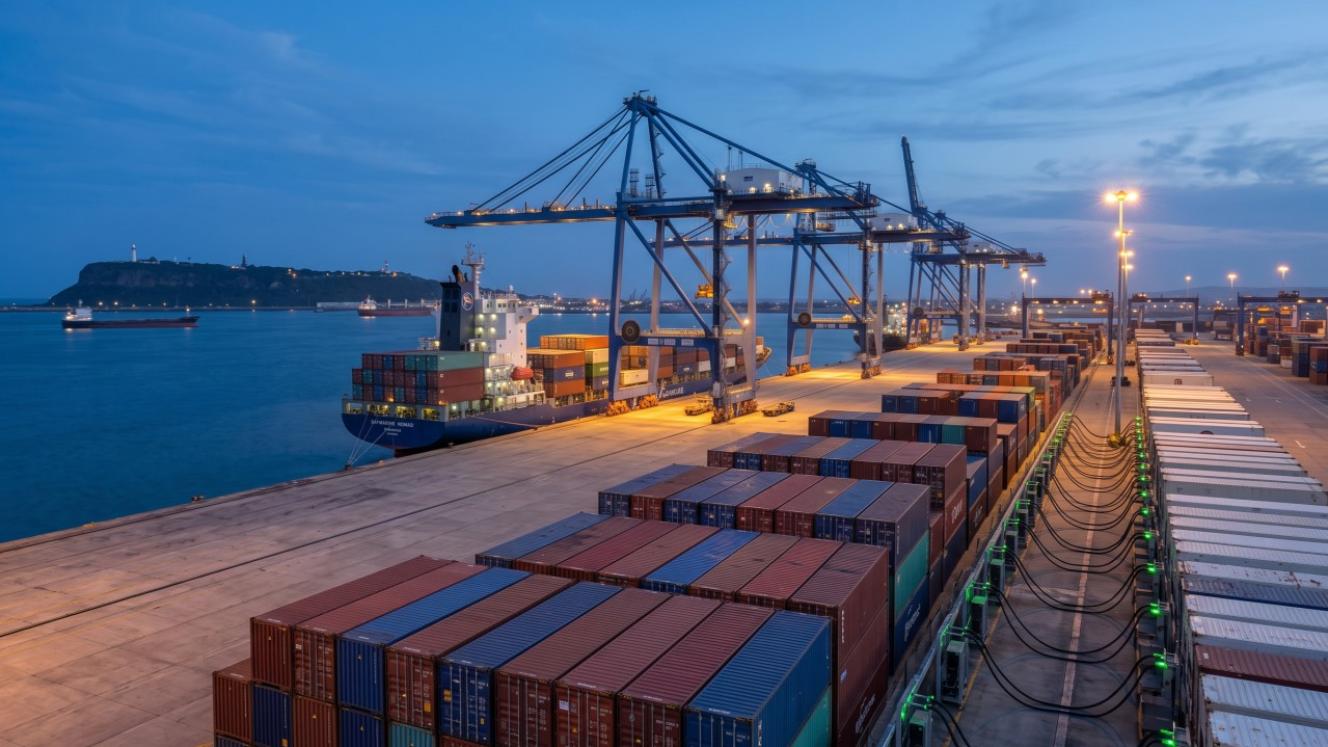
Zambia is positioning itself at the centre of southern Africa’s transport network as investment gathers pace across several major corridor projects linking the country to ports on both the east and west coasts. Speaking at the fifth Land- Linked Zambia conference in Lusaka recently, Africast chief executive and conference organiser Chimwemwe Nyirenda said Zambia should no longer be viewed as a landlocked country but rather as a “land-linked” nation connected by six strategic transport corridors. “It is fair to say that Zambia is at the centre of transport corridor development in the region,” he said. “We are at the centre of the $1.4 billion TAZARA revitalisation project and the Lobito Corridor project. We also have developments around the Beira, Nacala and North-South corridors, and, of course, the Walvis Bay-Ndola- Lubumbashi Corridor.” Nyirenda said several major infrastructure projects aimed at strengthening regional connectivity reflected Zambia’s commitment to developing its transport corridors. Among them is the upgrade of the TAZARA railway, the 1 860km line linking the Port of Dar es Salaam in Tanzania with Kapiri Mposhi in Zambia. The project includes the rehabilitation of track, stations, tunnels and bridges, as well as the construction of additional infrastructure along the corridor. Once completed, the upgrade is expected to increase annual freight volumes on the railway to 2.4 million tonnes from the current 100 000 tonnes. He also pointed to improvements around the Kazungula Bridge, which spans the Zambezi River between Zambia and Botswana and has strengthened one of the region’s key freight routes, as well as the proposed $2bn Kafue-Lion’s Den railway. In April this year, the governments of Zambia and Zimbabwe signed a memorandum of understanding to construct the 311km railway line linking Kafue in Zambia with Lion’s Den in Zimbabwe. According to Nyirenda, these and other investments are critical if Zambia is to achieve the government’s ambitious production targets of three million tonnes of copper a year by 2031, alongside annual production of 10 million tonnes of maize, one million tonnes of wheat and one million tonnes of soya beans. “The transport corridors that are bringing in people and exporting minerals as well as commodities should be ready with technology, capacity and, of course, efficiency,” he said. Nyirenda also pointed to the opportunities presented by the African Continental Free Trade Area (AfCFTA), which, citing World Economic Forum estimates, is expected to increase intra-African freight demand by 28%. He said this would create demand for an additional two million trucks, 100 000 rail wagons, 250 aircraft and more than 100 vessels, while significantly expanding the continent’s logistics market. LV
Zambia helping to strengthen regional connectivity
Comments | 0
© Now Media. This content is protected by copyright and may not be adapted or republished. If you would like to discuss cooperation opportunities, please contact: editor@freightnews.co.za.