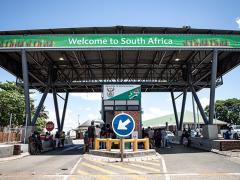
The campaign against nontariff barriers (NTBs) appears to be making headway thanks to the Trademark Southern Africa (TMSA)-facilitated Tripartite online NTB reporting and monitoring tool. “Nearly three quarters of all NTBs that have been logged in the past four years through the reporting system have been resolved,” Vonesai Hove, NTB expert at TMSA, told FTW. “This adds up to 344 NTBs in total as of May this year.” The UKaidfunded tool supports regional efforts to report and monitor NTBs that contribute to the high cost of trade and transport in Africa. While the system itself does not solve NTBs, it streamlines the process of identifying and processing complaints submitted by stakeholders, allowing for the systematic and transparent management of reported NTBs, said Hove. “This contributes to their successful resolution through improvements in policy measures and border processes in the countries concerned,” she said. “The NTB tool has enjoyed widespread use throughout the Tripartite region. The system is responsive to the needs of traders and transporters and provides accurate tracking of each NTB from logging to resolution,” said Hove. She pointed out that the headline of an article in FTW’s Cross Border 2013 feature published earlier this year, which suggested that the NTB reporting system was “toothless” because issues remained unsolved was at the very least misleading. “To date, 74.6% of all reported NTBs from several Comesa, EAC and SADC countries have successfully been tackled through the system. There are continuing efforts to increase this figure,” she said. Some of the NTBs that have successfully been resolved since being reported online include the lifting of weight restrictions at the Kariba bridge, the acceptance of certificates of origin for sugar produced in the region so that it can be traded in the region duty-free, and the removal of arbitrary transit fees and charges on road networks in the region. The remaining NTBs are mainly policy-related and require intensive and on-going bilateral efforts to completely eradicate them, she added. “We must continue to work together to come up with actionable and implementable solutions to problems transporters face in the region,” says Barney Curtis, executive director of Fesarta. By working closely with the Comesa-EAC-SADC Tripartite, he believes that the private sector can help resolve the NTBs that contribute to high trade and transport costs in Africa. TMSA recently launched a complementary short messaging service (SMS) reporting tool to make it easier than ever to report NTBs. “Truck drivers and other traders may not have access to the established web-based reporting system when they encounter a problem at an entry or exit point along their transit route,” Hove explained. “This new tool is a way to capture even more NTBs so countries can solve more problems.” Hove said there had been positive reaction to the SMS reporting tool which should lead to an increase in the number of resolved NTBs in the transport sector in particular. “Around 16% of all the reported cases through the system are transport-related, of which 44% have been resolved. This percentage is somewhat lower than our general success rate as most transportrelated NTBs arise from the lack of a regional transport regulatory framework that would promote market liberalisation in the transport sector.” Further marketing and advertising of the SMS reporting system within the Tripartite member countries is on-going. The mechanism is particularly useful to small and medium enterprises, the engines of growth on the continent, she added. “I think the SMS system will help us. Our drivers don’t have laptops or internet access so this tool will allow them to highlight the problems they encounter – we just need people to use it,” said Regina Chadya, a Zimbabwean clearing agent who was present at the recent launch in Lusaka. “The Tripartite NTB system, and especially the new SMS line, is a practical way for anyone on the ground, including the private sector, to become involved in resolving NTBs,” said Joseph Musariri, president of The Federation of Clearing and Freight Forwarders Associations of Southern Africa (FCFASA). INSERTS & CAPTION The system streamlines the process of identifying and processing complaints submitted by stakeholders. - Vonesai Hove 344 The number of NTBs solved to May this year
Winning the battle against NTB's
Comments | 0
© Now Media. This content is protected by copyright and may not be adapted or republished. If you would like to discuss cooperation opportunities, please contact: editor@freightnews.co.za.