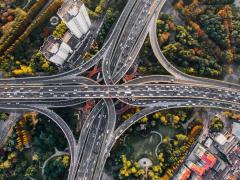
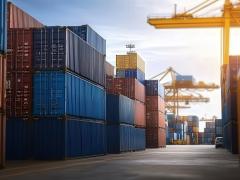
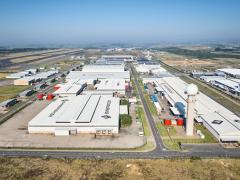
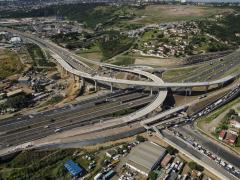
“The problems are Durban port, rail and City Deep inland port,” says Pat Corbin, “a combination of congestion and inefficiency leading to protracted delays with average time from discharge to delivery being over two weeks, and hence a shortage of containers.” The major contributing factors, in his view, are government – particularly public enterprises, transport and dti . “All are doing little to effectively address these ‘challenges’ we have endured for years.” The ‘monopolistic’ rail entity is a major stumbling block in LM Pelser’s view. “Road transport has done its best to convey as much of the cargo as possible but shippers depending on exports and imports have run into a brick wall in the ports. “Consumer goods are presently very dependent on road transport as the rail infrastructure does not connect to the major distribution depots.” From recent press reports, says Corbin, we learn that our minister of transport’s priority is to promote a ‘Gautrain type’ passenger service to Durban. “The parliamentary standing committee has reportedly berated the CEO for not activating a feasibility study – something we in the private sector cannot take seriously either. “It is common cause that freight rail, in the past referred to as ‘snail rail’, has an ageing infrastructure, rolling stock, signalling system and track – all contributing to restricted train frequencies. Other aggravating factors are frequent derailments and instances of cable theft, a critical issue raised by Transnet with parliament years ago to no avail. “But,” says Corbin, “this untenable situation has not deterred government from its efforts to promote a movement from road to rail, an initiative the private sector would support if the government would first ensure the rail service was functioning.” Saaff’s John White agrees the question of capacity must be a priority.” I don’t believe it has been an issue, but it will raise its head in time. “I think Gauteng shippers are very resilient, and have simply got on with the business of manufacturing and exporting, deflecting the problems as they arise. While issues like strikes, delays and the impending toll road system are aberrations – the cumulative effect of all this does however have a negative impact on efficiencies and long term profitability.” What are the solutions? It’s the longer term issues that should be planned for, says White. “To an extent we need to look at the success stories elsewhere and adapt them for South Africa. We also need to adjust our facilities to cater for the changes in a global context. Here I refer specifically to the large 6000 TEU and above vessels that will want to call at SA ports.” In addressing capacity, the obvious places to look are City Deep Terminal and OR Tambo International Airport, says White, in addition to the infrastructure and links to these terminals as a gateway to trade. “For SA to move to a winning nation, we have to increase productivity and leapfrog the traditional way of handling trade. There are both negative and positive things on the horizon and they will play a major role and impact on our ability to make this leap of faith.” White proposes integrating a trade centre by twinning it with an airport and a seaport. “Dube Trade Centre has addressed this in KZN. The Springs/Tambo next generation inland port and logistics gateway is another example. This doesn’t have to replace City Deep, but it certainly will take up the additional capacity and give exporters a more holistic option to get their products to the end user.” He is confident that Customs’ modernised system and approach to genuine trade will have benefits down the line as it is implemented while the toll road system together with AARTO have to be seen as a challenge. “We need to debate these issues with the powers that be to make sure that the implementation is done in such a way that it does not alienate the very people they rely on for support.” “It is clear Gauteng is not in control of its international cargo logistics,” says Corbin. “Perhaps along with its Metro councils, Gauteng should make more strident representations to national government for these serious impediments to trade to be actively addressed. “City Deep inland port needs to be urgently made fully operational with guaranteed delivery times between it and coastal ports if the shift from rail to road (the more expensive mode) is to be reversed.” Top of Pelser’s list is privatisation of Transnet. “Take it out of the hands of politicians and get skills into Transnet. “Identify road and rail friendly cargo – and Transnet should not compete with road. The economies of road and rail are worlds apart.” Pelser also calls for more openness. “Let the shipper participate in the strategic positioning and planning process. “Remove barriers between the shipper and Transnet. Why should government departments decide on the future of South African logistics – like the Department of Transport compiling a transport strategy. Who will implement it? Did they get the input from shippers?” And he questions why the Department of Public Enterprises should be the major shareholder of Transnet. “Shippers are the biggest users of rail – should they not sit on the board of Transnet?” How have the challenges affected Gauteng’s business outlook? Business by its nature has to be optimistic, says White. “The problems to date are seen as short term ones that certainly hinder trade, but are there to be overcome. It’s the long term capacity challenges that we need to be concerned about.” “Having lived with the growing problems already mentioned for many years, business has had to adapt to longer lead times on both imports and exports,” says Corbin, “with attendant cost consequences and delays, making exports less internationally competitive and imports more expensive. “The Gauteng economy pulls the rest of the country along and it does not make sense for its growth to be restricted by logistical capacity. Completion of the N17W needs to be prioritised by national government and Johannesburg needs to be funded to complete the N2W. Road congestion particularly needs to be addressed as our most economically active community is spending on average an extra hour a day unproductively in their cars.” Gauteng’s logistics challenges have clearly reduced economic recovery and growth as well as new job opportunities, in Pelser’s view. The result, he says, has been a reduction in global competitiveness and loss of global customer confidence in South Africa. The bottom line is that industry has been unable to achieve market growth, cost reduction and customer satisfaction. And nor are companies able to meet customer expectations – which are reliability, dependability, flexibility cost efficiency and just in time delivery. A thriving import/export industry is at the heart of economic growth – underpinned by an efficient and effective logistics chain. Clearly the shortcomings must be addressed sooner rather than later.
What are the key logistics issues facing Gauteng shippers?
Comments | 0
© Now Media. This content is protected by copyright and may not be adapted or republished. If you would like to discuss cooperation opportunities, please contact: editor@freightnews.co.za.