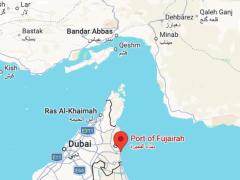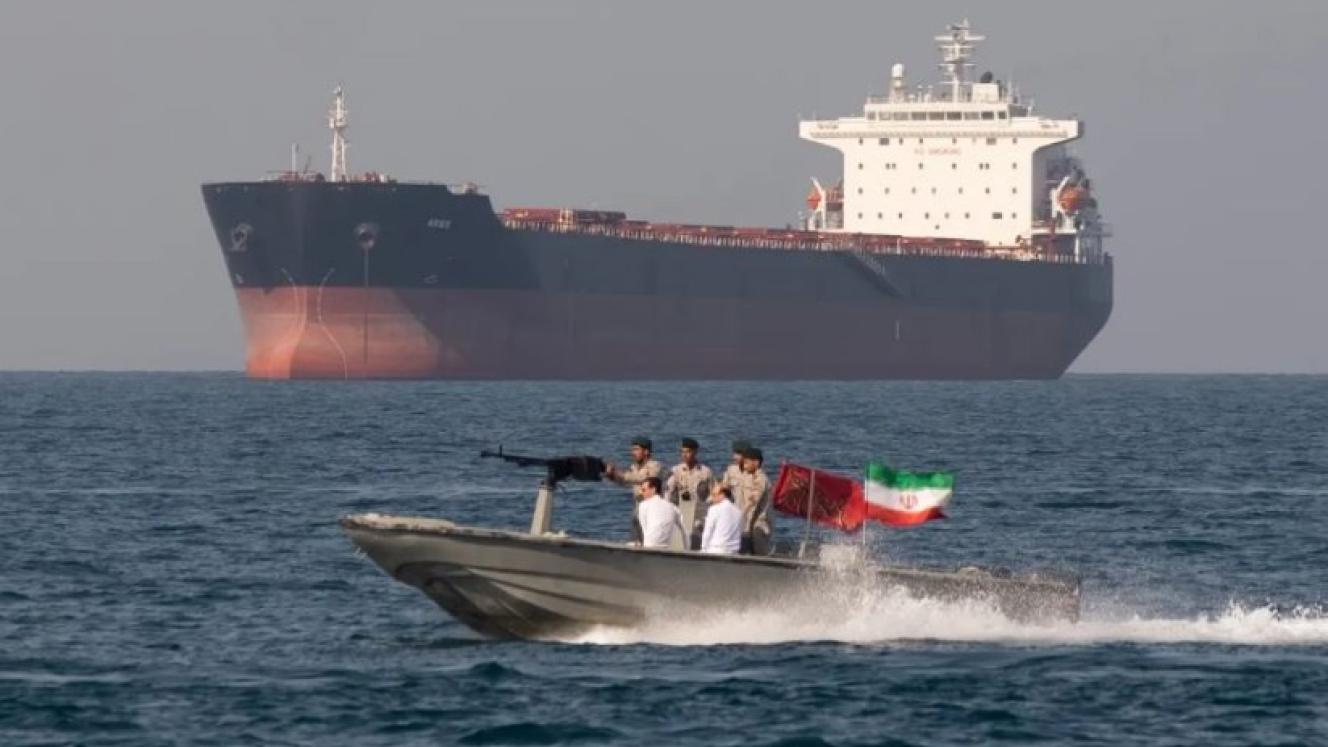
Cancelled war-risk insurance by leading protection and indemnity (P&I) mutuals is not going to be turned around anytime soon, even if there was a cessation of hostilities in the Middle East and the Strait of Hormuz seemed safer for vessel traffic.
Mike Brews, director of Horizon Underwriting Managers, said visuals playing across television screens since the missiles started flying last Saturday meant “prudent carriers and shippers are avoiding the area like the plague”.
He said although there was still some cargo on the water heading into the Persian Gulf and Gulf of Oman, it was with extreme caution that service providers were willing to sustain supply chains for affected areas.
Brews, who also heads up the Cargo Committee at the International Union of Marine Insurance (IUMI), said it was important to consider recent Houthi attacks in the Red Sea and how they affected the long-term safety dynamics of a waterway.
“If you look at the Suez Canal route between Europe, the Middle East and the Far East, despite the fact that no attacks on vessels have occurred for a number of months now, vessel owners are still avoiding that area because of the potential loss.”
The problem with the current conflict is not only that it’s so much more extreme, involving leading countries waging war on one another as opposed to a proxy rebel group in Yemen, but that there’s no alternative route for Gulf cargo.
“With the Suez situation you can still divert vessels away from risk around the Cape of Good Hope, but not in the current situation.”
Surely then, Lloyd’s List is justified in contending that spiking oil and gas prices signal that Hormuz disruptions will prove short-lived, as governments prioritise restoring a stable trade environment.
Brews, though, isn’t optimistic.
“Hostilities can stop but we've seen how quickly they can start without any warning. Now, with the heightened tensions in the Middle East, I think the markets are going to be very cautious in how do we get back into it?
“Do we lift the war-risk exclusions? Do we take a chance? You’ll probably find some insurers willing to reconsider cover at a higher price, but I can’t see anyone dipping their toes in the water anytime soon. Premiums could drop if hostilities stop but I think it will take weeks if not months before we see any potential for change.”
On the topic of any remaining war-risk insurance, after seven of the 12 leading P&I mutuals cancelled cover at midnight on March 5, Brews said there were some underwriters in the Lloyd’s of London market insuring cargo in the Gulf.
“But it’s exorbitant and my understanding is that it’s at five to ten times the current rate. Also, it’s done on a per-voyage basis at whatever rate is deemed necessary in the event of something going wrong.”
Brews, whose wife was in Dubai earlier this week and struggled to get a flight out, said that he satellite-tracked her plane as it flew over the Gulf – a “hair-raising experience” that could be exponentially scaled across markets as the violence and trade disruption build.
“I don’t think we can expect to see significant change soon. And, if so, it’s going to take time before risk settles and anyone is prepared to insure cargo at levels seen before the war started.”