AD Ports Group has joined Africa Ports Development’s (APD) 30-year concession to design, build and operate a new dry bulk terminal at the Port of Douala in the Republic of Cameroon.
The agreement establishes an investment structure, in which AD Ports Group and two other UAE investors own 60% of the operating company alongside Africa Ports Development Ltd's 40% ownership, implying an effective economic interest of 51% for AD Ports Group. The group’s share of investment is expected to be around €73.4 million for the development of phase one of the dry bulk terminal.
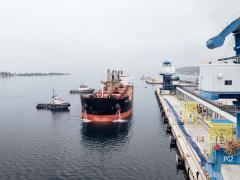
Phase one comprises the construction of two berths and approximately 450 metres of quay wall, with an annual handling capacity of around four million tonnes of dry bulk cargo, such as clinker, gypsum, fertiliser, and grain. Construction is expected to take place in close collaboration with the Port Authority of Douala between 2026 and 2028.
AD Ports Group regional CEO, Mohamed Eidha Al Menhali, said the agreement represented a strategically important expansion of the company’s presence in Africa and reinforced its commitment to developing high-impact maritime infrastructure in high-growth markets.
“The Douala dry bulk terminal will enhance trade resilience, support industrial development, and strengthen Cameroon’s role as a gateway to Central Africa,” said Al Menhali.
He said the company would combine local market expertise with its global capabilities in port development and operations to support the Port Authority of Douala’s plans to modernise the port.
“We commend the Port Authority for the significant progress achieved in recent years, which has driven strong growth in Cameroon’s maritime sector, and we look forward to contributing further to its long-term development ambitions.”
Africa Ports Development managing partner Marc Tabchy said the collaboration established a strategic synergy “combining our group’s ambition and regional depth with AD Ports Group’s operational excellence”.
The new terminal will strengthen regional supply chains and enhance the efficiency of cargo flows through the port, which handles most of the country’s bulk imports and serves as a transit hub for landlocked central African markets.