Transparent invoicing,
reduced delays and improved
customer service are just a
few of the benefits Transnet
Port Terminals customers can
expect with the implementation of a
customer- centric ‘intelliport’ system
at Durban port in future.
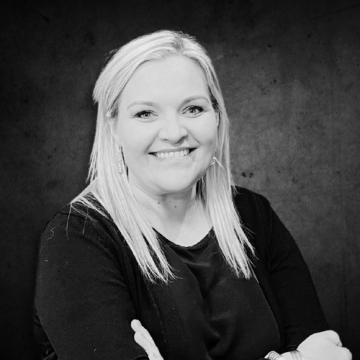
TPT chief information officer
Deirdre Ackermann highlighted
the differences between a smart
port, which creates community
interactions between customers
and the port, and an ‘intelliport’,
which relies on automation to
drive operational and productivity
improvements. She said the port
had worked closely with consultants
on a customer-centric approach to
intelliport operations over the past
six months.
Ackermann said international
studies into customer perspectives
showed that 60% of customer-centric
businesses were at least 60% more
profitable.
“We also know that customers
will pay up to 25% more – that’s not
a threat that we are going to put up
our prices. About 83% of business
to business buyers agree that an
excellent customer service experience
would lead to them purchasing
again,” Ackermann said.
She highlighted a Deloitte
study of customer experiences and
perceptions, which included cargo
owners, rail partners and shipping
lines across international ports,
showing they
shared the same
demands.
“Everyone
wants quick
turnaround times,
safe and secure
operations within
the environment,
and cost savings,”
Ackermann said.
She added that TPT’s recent
internal research by Deloitte had
highlighted customers’ “pain points”
which had enabled TPT to identify
areas needing improvement to
become globally competitive.
She said the desktop research had
tracked the business and customers’
journey and perspectives through
different parts of the organisation
including sea transit, terminal
operations and land transit, turning
out 180 insights and observations
that would be incorporated into
future projects.
“Delays were the number one issue;
inefficiencies in the planning process
is what causes significant delays
down stream. We also had a look at
reporting, insights and prediction
– customers expect us to give them
true, accurate and
timely information
because they
need to make
decisions based
on information we
send them. They
need to be able
to proactively see
impacts and how
they can prevent
those things from happening,”
Ackermann said.
Inaccuracy and error was another
“huge” pain point, she added.
“Things that are seemingly
insignificant in the environment
(TPT) cause very significant
operational impact,” Ackermann
said.
“We have looked at things like
frictionless processing, automating
more of our processes and integrating
better with our supply chain. There
has to be collaboration.”
Ackermann said the crux of
an “intelliport” was augmented
autonomy which would enable staff
to make decisions based on correct
information provided at any given
time.
“We are also introducing artificial
intelligence machine learning so
that to an extent we can automate
our environment. It is about being
able to be agile enough to handle any
specific request we might get from
industry,” she said.
Ackermann outlined three
horizons for digital transformation
which practically would include
moving from a scheduled
coordinated asset management
system to predictive and then
prescriptive maintenance of
machinery. This would make the port
fit for the future by integrating with
Transnet Freight Rail, truckers and
other customers and changing the
business model to monetise adjacent
and value adding services.
She said the port had initiated
a pilot project where it was
instrumenting four cranes, eight
straddle carriers, two empty
container handlers, 16 haulers and
one diesel bowser to digitally access
data.
“If we see certain behaviour on a
crane can we predict the outcome
and what can we do about it? Can
we start sending information to the
procurement team that they need
to price or should we start sending
information to technicians that
they need to do this kind of repair?
All of that is connecting via sensors
and via onboard PLC integration
into a cloud-based system where we
are going to do the analysis, to see
if the outcome supports the things
we think it is going to support,” she
said.
The port was also reassessing its
routing and whether Navis should
be tweaked to improve efficiency,
she added.
Ultimately, the aim was to meet
customer demands for faster vessel
handling, fewer delays, completely
accurate transparent invoicing,
a consistent experience, reliable
service, flexibility of schedule, a
single point of contact and self
service capabilities, said Ackermann.
INSERT AND CAPTION
60% of customer-centric
businesses are at least 60%
more profitable.
– Deirdre Ackermann
TPT pushes ‘intelliport’ concept
Comments | 0
© Now Media. This content is protected by copyright and may not be adapted or republished. If you would like to discuss cooperation opportunities, please contact: editor@freightnews.co.za.