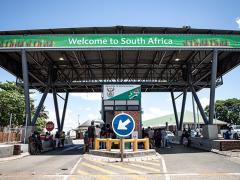
THE HARMONISATION of axle load limits on the Trans-Kalahari Corridor – with trucks in Namibia, Botswana and SA all travelling with up to 9 000-kilograms axle loads – is a good omen for the other harmonisation priorities of the TKC Management Committee (TKCMC), according to Bevan Simataa of the Trans-Kalahari Corridor Secretariat. And there’s quite a list of priorities, he told FTW. “On the customs side,” he said, “we already have the single administrative document (SAD) in place, and harmonised border post opening hours.” The focus is now on interaction between the customs authorities of all three countries along the corridor – with each electronically-connected to the others. “This is so that information on a vehicle and its load keyed in at the beginning of the route electronically follows it as it transits the corridor,” said Simataa. “It then doesn’t need to be keyed in again at each succeeding border post along the route.” The TKCMC is also now targeting a risk-based approach in customs’ cargo examinations, with the compliant, accredited transporters getting a carrot rather than a stick approach. “A lot of users of the TKC are compliant,” said Simataa, “and need to be offered streamlined treatment at customs posts.” Animals on the road is one of the hazards on the Botswana stretch of the corridor, and the TKCMC has devised a plan to beat it. “But first we have to look at an environmental impact study,” said Simataa, “before our plan to fence off the corridor in Botswana can be implemented.” The TKCMC also has a keen eye on harmonising the weighbridges along the route. The problem faced is that a lot of the equipment is old, and needs to be upgraded. “We need to check that the upgrading brings them each up to the same operating standard as the others.”
TKC maps next step to one-stop border post
Comments | 0
© Now Media. This content is protected by copyright and may not be adapted or republished. If you would like to discuss cooperation opportunities, please contact: editor@freightnews.co.za.