Global interest and investment in the Lobito Corridor demonstrate how regional logistics can serve as the key element of industrial strategy, because the infrastructure that moves ore and the systems that manage its movement naturally operate beyond national borders.
This is according to Shirley Webber and Stephen Seaka, respectively managing principal and coverage head of Resources and Energy at Absa CIB, and managing executive for Public Sector and Growth Capital Solutions, also at Absa’s Corporate and Investment Banking division.
The authors of How Africa Can Turn Fragmented Mineral Belts into Coherent Regional Value Chains believe that the Corridor’s potential was made clear in 2023 when a test consignment of ore was successfully shipped via the refurbished rail freight line linking the Democratic Republic of the Congo (DRC) with the Angolan port.
“Roughly 1 100 tonnes of copper concentrate from the Kamoa-Kakula complex in Kolwezi were loaded at the Impala Terminals facility and sent west by rail to the Port of Lobito.
“The journey took eight days,” Webber and Seaka write.
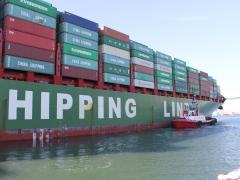
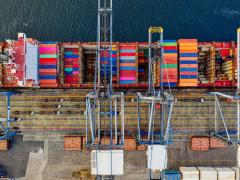
Underscoring the need for foreign direct investment (FDI) in the Lobito Corridor is the much longer turnaround time for copper and cobalt exports via the ports of Dar es Salaam and Durban.
The authors of the article say that until the trial run in 2023, more than nine-tenths of the Kamoa-Kakula mine’s output was routed through the Tanzanian and South African ports, where a single turnaround typically stretched to six weeks.
Since it is the shortest, most direct route for ore out of the DRC, more than $6 billion in FDI has been pledged towards improving and expanding the Lobito Corridor, of which $4bn will be contributed by the United States.
Substantial additional investment pledges through loans and equity by the European Union, Trafigura, Mota-Engil, Africa Finance Corporation and the African Development Bank, confirm the Corridor’s growing status as one of the fastest-growing focal points for FDI in the world.
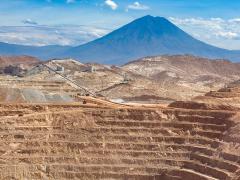
Global demand for ore from the Copperbelt in Zambia and DRC is also not showing any signs of slowing down, despite geopolitical volatility and trade uncertainty between leading industrial importers of African minerals.
In late December, Mining Technology in London forecast that DRC copper output would grow by 6% in 2026 to 3.4 million tonnes, recovering from 2025 disruptions at Kamoa-Kakula and supported by expansions at the Mutanda, TFM and Kinsevere mines. Additional growth comes from new projects like Mutoshi and Kipushi.
As for Zambia, the country is targeting over one million tonnes of copper production in 2026, building on 820 000 tonnes in 2024 and expansions at mines like First Quantum's S3, Barrick Lumwana, Konkola, and new developments such as Mingomba.
This represents growth of around 20-25% from recent levels amid investments exceeding $10bn, the publication says.
Considering persistent challenges on well-established corridors to Dar and Durban, it stands to reason why Angola, the DRC and Zambia have positioned the Lobito Corridor as a flagship supported by the US, EU and a coalition of multilateral financiers, Webber and Seaka write.
“The goal is to create an alternative westward route for copper and cobalt exports, reducing dependence on longer paths through South African and East African ports, lowering transport times, and de-risking supply for battery and clean-energy manufacturers.”
- This post draws from the opening section of Webber and Seaka’s article, with a follow-up post scheduled later this week.