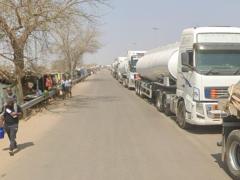
The application by Transnet National Ports Authority (TNPA) for an 18.06% tariff increase for the 2012/13 tax year has met with screams of complaint from a widespread range of business interests and representative bodies. There was a similar thought trend reflected in a large number of the complainants’ submissions made to the Ports Regulator – which is tasked with deciding on what would be a fair tariff increase to allow TNPA. This was that 18.06% is far and away above the current inflation rate of about 5.5%; that it would have a negative impact on the cost of doing business for the already hard-pressed export/ import, freight and transport industry sectors; that it would render SA’s global exporter industries uncompetitive; that it was unfair to allow what was claimed to be an inefficient parastatal to charge that much more for poor service; and that allowing the TNPA to build in guaranteed profit to its costing model for the new tariff was unacceptable. Business Unity South Africa (Busa) introduced its extensive submission by saying: “Inflating proposed profit margins is counterproductive and works against all efforts to stimulate economic growth and create job opportunities. “The proposed increase will hamper economic growth and development. Therefore, we oppose it.” The business association used a number of FTW articles to illustrate certain of the points it was making, including: “Truck queues (at the Durban port terminals) are the longest in the history of containerisation”; “The highest port costs in the world are driving trade away from SA”; and “Lines skip Durban to avoid persistent congestion”. After lengthy argument against the 18.06% increase, Busa concluded by saying it regarded the proposed tariff and cargo due increases for the 2012/13 year as being “excessive”. “It is thus hoped that the Ports Regulator (PR) will carefully consider the TNPA’s application not just in the light of what is good for Transnet but, more importantly, what is good for the country.” The SA Association of Freight Forwarders (Saaff) had a similar in-depth analysis behind its submission to the PR, and used a complex set of arithmetic calculations to support its verbal argument. It also expressed a hardbiting conclusion. “For a state-owned utility such as Transnet, controlling virtually all ports and indirectly the vast majority of marine cargo movements, to contemplate an annual tariff increase at triple that of the current consumer price inflation (CPI) is simply breathtaking. “It is incomprehensible that increases of this magnitude in such an important area are being proposed at a time when the country’s economy may just be starting to recover from the worst global recession in seventy years.” Similar dissatisfaction was expressed by other complainants. Anglo American, for example, said: “(We) believe the 18.06% increase is unreasonable when considering the September consumer price index (CPI) of 5.7% and the producer price index (PPI) of 8.9%. “SA port tariffs are among the highest in the world, and an increase of 18.06% will further impact on our competitiveness in the international market.” And the Fresh Produce Exporters’ Forum (FPEF) introduced its submission by saying: “The proposed increase of 18.06% is starkly incongruous with the government’s monetary policy of inflation targeting.” Forestry SA was equally dismissive of the increase proposed by TNPA. “Due to the high volume of industry exports,” it said, “the proposed across-the board-increase requested by the TNPA will have farreaching impacts not only on the timber processing industry but also on the forestry industry.... “It has become a worrying trend that “administered price” inflation is consistently out of line with the general inflation rate, with parastatals frequently requesting (and often being granted) tariff increases that bear absolutely no relation to the CPI or PPI inflation rates.” As part of its submission, Safmarine/Maersk made an interesting point. “TNPA tariffs are considerably higher than other regional and global ports,” it said, “justifying a decrease of 9.2% and not an increase of 18.06%.” All the other businesses and bodies also questioned the justification behind the TNPA costing model for its application – and all utterly condemned the 18.06% level of the tariff increase. There were 22 submissions received by the PR, of which seven were classified as confidential, PR CEO Riad Khan told FTW.
The jury is out on port tariff hike
Comments | 0
© Now Media. This content is protected by copyright and may not be adapted or republished. If you would like to discuss cooperation opportunities, please contact: editor@freightnews.co.za.