South Africa needs balanced meat imports and exports to ensure food security and price stability.
This is the view the Association of Meat Importers and Exporters (Amie) in its latest newsletter, in which it notes high food prices have made meat a ‘luxury’ item for many low-income households, according to the Pietermaritzburg Economic Justice and Dignity (PMBEJD) group.
It notes that, according to PMBEJD reports, cost constraints have forced households to limit purchases to affordable options such as chicken pieces, livers, gizzards, beef, tripe, and sausage.
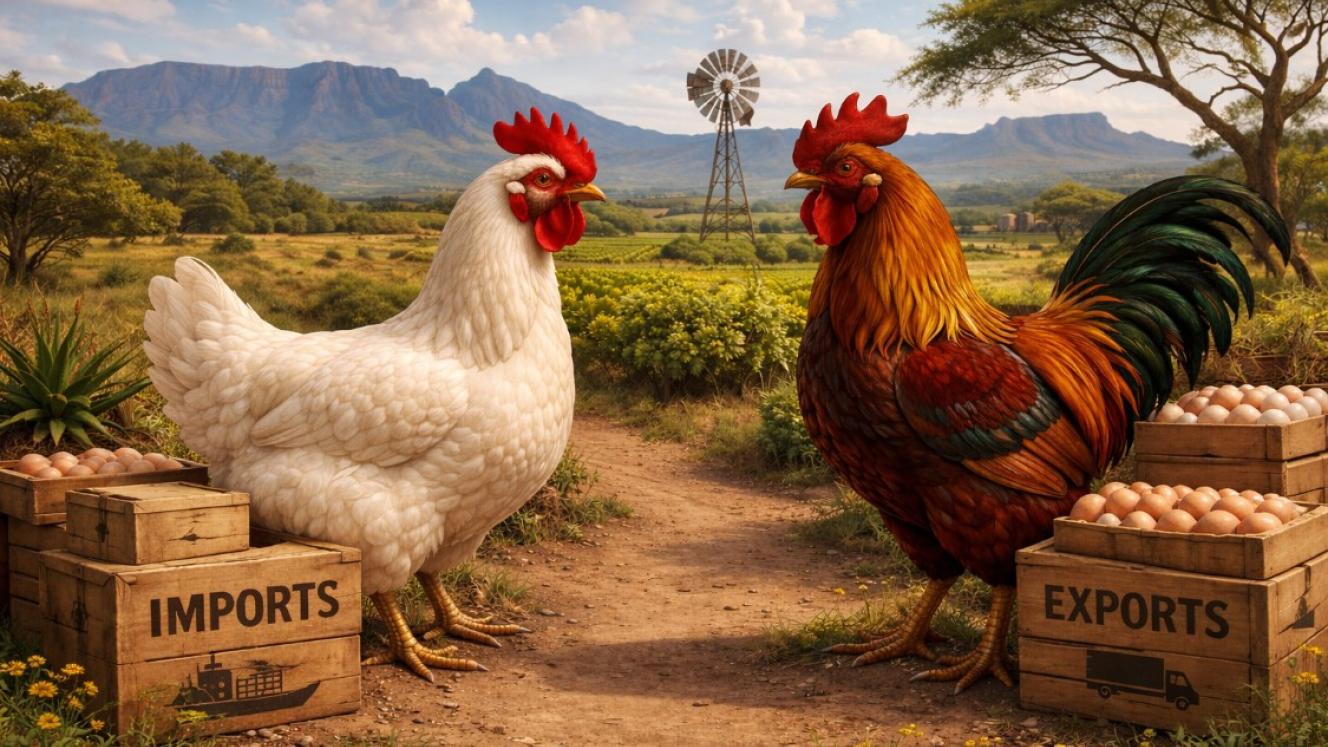
"South Africa relies on a balance between meat imports and exports to ensure a stable supply,” the association said.
“Maintaining this balance is essential for stabilising food prices, supporting farmers, and ensuring that consumers have consistent access to meat products.”
According to Amie, South Africa’s livestock sector produces beef, poultry, lamb, and pork, with poultry accounting for more than half of total meat consumption due to its affordability. However, challenges including drought, high feed costs, and disease outbreaks can constrain local supply, necessitating imports.
Amie notes that South Africa imports significant volumes of poultry, particularly mechanically deboned meat (MDM), frozen chicken offal, and frozen chicken portions, mainly from Brazil, the United States, and the European Union.
"These imports are crucial to help bridge the gap between local production and consumption,” Amie said.
“And when it comes to products like MDM, it is important to note this product is not produced locally in sufficient quantities, making it a critical import element to sustain the South African meat processing industry.”
Research by the Bureau for Food and Agricultural Policy indicates that poultry imports rise when local production falls short, preventing shortages and supporting affordable protein access.
"Without imports, chicken prices could increase significantly, reducing many families' access to protein," Amie said.
It noted that poultry dominates consumption at about 60%, followed by beef, pork, and lamb/mutton. South Africans consume around 65kg of meat per person annually, with chicken’s affordability driving its preference.
On the export side, South Africa ships beef and lamb/mutton meat to markets in Africa and the Middle East.
"Export markets encourage farmers to maintain high production standards and improve livestock management,” Amie said.
It argued that balanced trade stabilised supply by supplementing domestic production during disruptions, preventing extreme price spikes, generating farmer income through exports, and buffering against shocks such as foot-and-mouth disease.
"Balanced meat imports and exports are essential for maintaining food security in South Africa. Imports, particularly poultry, help ensure local demand for affordable protein is met, while exports of beef and lamb support farmers and contribute to economic growth.”
However, the FairPlay Movement has challenged this view in an opinion piece in The FairPlay Bulletin, in which it argues imports, particularly dumped frozen bone-in portions, distort the market rather than fill a genuine gap.
"Chicken importers keep repeating the claim that South Africa can’t produce enough chicken, but the facts show imports distort the market, not support it,” FairPlay argued.
It acknowledges the necessity to import MDM due to limited local production but contends bone-in portions compete directly with local individually quick-frozen chicken, which makes up nearly half of domestic output.
"Imports of MDM are indeed necessary, but only because most local producers choose not to make this product. The most contentious area is bone-in chicken portions such as leg quarters, which made up 8% of January chicken imports,” FairPlay argued.
It added that MDM comprised 60% of chicken imports and offal 29%.
South Africa has anti-dumping duties imposed on imports from nine countries, with US imports entering under an African Growth and Opportunity Act quota.
FairPlay’s critique points to rising local production since the 2019 Poultry Master Plan and the industry’s global competitiveness. Production has increased steadily, with producers scaling up during crises such as Covid-19 and bird flu outbreaks.
"South Africa is the second most competitive poultry producer in the world, ahead of the US and Europe. Local producers have shown they can ramp up production to meet unexpected shortages,” FairPlay noted.
“For importers to say local producers cannot meet local demand is less than accurate. They either choose not to, as is the case with MDM, or are held back by dumped imports.”