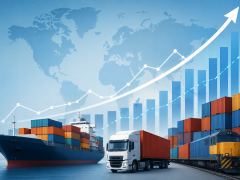
The use of technology is fast tracking the airfreight industry into the digital age, according to Kum Naicker, cargo manager of Emirates SkyCargo. “It’s not a new thing on the aviation scene,” he told FTW. “For some time now, people have been able to book their tickets and even check in online, and an increasing number is even doing this on their mobile phones.” But, he added, while passenger services have been at the forefront of adopting new technologies, the cargo industry has also made great strides in the development and rollout of technology solutions to simplify business operations. “In 2006,” Naicker said, “Emirates SkyCargo made the headlines when it launched SkyChain. This was a new-generation cargo reservation and operations system that revolutionised the method of using information systems – and has become the standard in the airfreight industry.” Now poised to transform the airfreight industry in a similar or even greater manner is e-freight, an economical electronic process that simplifies the business of cargo transportation by eliminating the use of paper and reducing handling and processing costs. E-freight decreases the waiting time to process freight, while empowering the customers to clear freight from the comfort of their offices. Using Electronic Data Interchange (EDI) messaging to exchange quality information from the source at the outset of a shipment life cycle, it helps to reduce errors and increases the efficiency of handling airfreight. It is an industrywide initiative facilitated by Iata and involves carriers, freight forwarders, ground handlers, shippers and customs authorities. Through a series of collaborative engagements, the industry has developed an adequate legal framework permitting the use of electronic information to replace paper. It aims to expedite the carriage of goods while at the same time reducing the carbon footprint of the airline industry and contribute to environment conservation. What are the benefits? The main benefit of e-freight is the reduction of paper in the handling of airfreight, which will result in an industry saving of up to US$4.9 billion annually. Furthermore, forwarders who send traffic using e-freight can enjoy the benefits of a faster service through reduced cycle times, greater reliability and accuracy with e-freight’s onetime electronic data entry at point of origin. E-freight also offers better visibility as electronic documentation allows for online track and trace functionality, and customs benefits as the number of fines is reduced and deposits are no longer required. The adoption of e-freight is spreading at an exponential rate with an increased number of shipments from compliant airports around the world being sent in this way. The adoption rate in South Africa is still relatively low but those bold enough to set the pace will certainly have a competitive advantage and better serve their customers. This is an industry initiative and the challenge is for the industry to embrace this innovation and simplify the business for the future. Emirates SkyCargo, as one of the early adopters and avid advocates of e-freight, in July 2010 reached the incredible milestone of one million kilograms of paperless cargo consignments a month and has already passed the 16 million kilogram mark in total e-freight shipments this year. Emirates SkyCargo is recording a healthy adoption rate of 12% of its shipments from certified trade lane moving as e-freight. Contrary to common misconceptions, e-freight is not expensive to implement. It is a mechanism to collectively remove paper from the supply chain at no or minimal cost. Even small organisations that do not have an in-house messaging system can use e-freight by logging on to websites such as that of Emirates SkyCargo (www.skycargo.com) E-freight simplifies the shipping process by replacing following documents: Trade • documents: Invoice, Packing List, Certificate of Origin (where legally feasible) • Transport documents: Flight Manifest, Air Waybill, House Manifest, House Waybill • Customs documents: Export and Import Cargo Declaration and Release, Export and Import Goods Declaration and Release By the end of 2010, e-freight will replace a total of 20 documents, eliminating a weight of more than 7 800 tones of paper documents annually.
Technology transforming cargo industry
Comments | 0
© Now Media. This content is protected by copyright and may not be adapted or republished. If you would like to discuss cooperation opportunities, please contact: editor@freightnews.co.za.