Data centres and semiconductor manufacturing are seen as more attractive investment opportunities than mines and processing plants, according to Unctad’s January Global Investment Trends Monitor.
It states: “Looking at both greenfield project announcements and international project finance deals, the sectors with the largest increases in 2025 were data centres and semiconductors.”
The value of foreign direct investment (FDI) in new semiconductor projects during 2025 increased by 35% over the previous year.
“In contrast, renewable energy, industrial and residential/commercial real estate, GVC-intensive industries, energy-related sectors, including critical minerals and infrastructures, recorded declines,” according to the monitor.
“Geopolitical tensions, regional conflicts and economic fragmentation trends are likely to depress project activity, with further concentration of capital expenditures in few strategic industries, especially data centres and semiconductors.”
The result is that international project finance, mainly focused on infrastructure (which is needed by mines), continued its downward trend, with the number of deals falling 12% and their value declining 16%.
This is the fourth consecutive year of negative growth, despite slightly lower interest rates in both advanced and developing markets. Investors are reluctant to make long-term financing commitments for large infrastructure projects.
Investment is going into the global (wealthy) north.
FDI flows to developed economies grew by 43% to US$728 billion, while flows to developing economies declined by 2% to an estimated $877bn, or 55% of global flows.
Despite the hype, investment in extractive industries and critical minerals projects, across both greenfield and international project finance, continued their downward trend in 2025 following the decline in 2024.
The total value of newly announced extractive projects fell by 36%, while the number of projects declined by 14%.
The drop in investment in critical minerals was even more pronounced, falling to just $10bn, or 63% below the 2024 level.
“Persistently lower energy prices and heightened price volatility for critical minerals contributed to increased investor caution,” the monitor states.
This is expected to be temporary.
The Brookings Institute’s 2026 Foresight Africa report states: “The race for critical minerals is on. The demand is high and growing: By 2040, 4.5 times as much lithium and 2.3 times as much graphite will be needed,” citing the International Energy Agency’s Global Critical Minerals Outlook 2025.
“Africa is well positioned to become one of these trusted partners to the world – but the continent needs to jump on the opportunity quickly,” the report states.
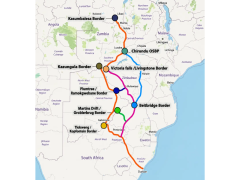
It adds: “Countries along the mining corridors can invest in complementary infrastructure (secondary roads, special economic and industrial zones, and urban infrastructure for cities along the corridor).
“These additional, complementary investments are the key to unleashing economic development along the transportation and energy corridor, unlocking new business opportunities and creating high-quality jobs.”