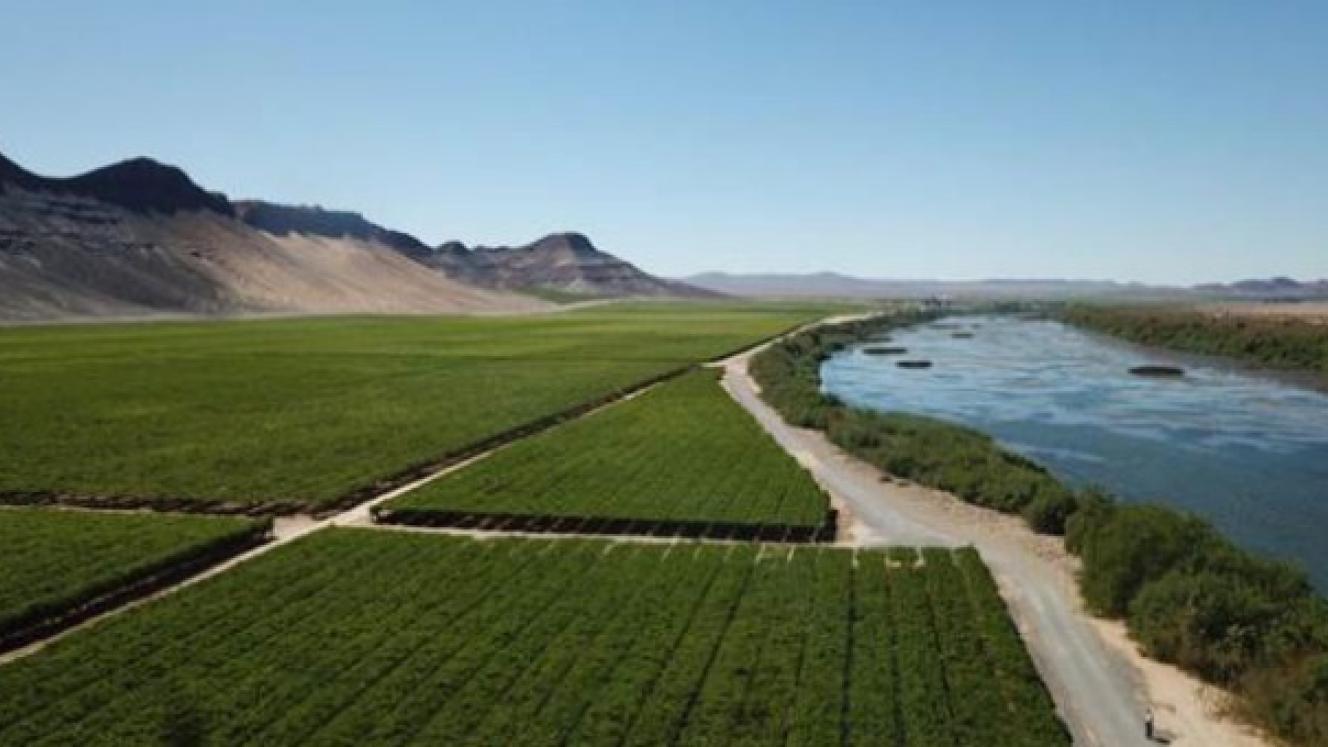
Namibia has reiterated its concerns that the Lesotho Highlands Water Project (LHWP) could affect downstream irrigation along the Orange River in the Karas region, home to the country’s budding Aussenkehr table grape area.
In a statement issued on Friday, Namibia's current minister of agriculture, fisheries, water and land reform, Ingenesia Inge Zaamwani, said the government of President Netumbo Nandi-Ndaitwah was still waiting for a response from South Africa about the potential impact that Phase 2 of the Lesotho Highlands Water Project could have on Namibia’s agricultural interests.
As a result, Zaamwani’s department has made it clear it has not issued a “no objection” to Phase 2 of the project.
The ministry said that a “no objection” participation in the approval process for Phase 2 could ultimately affect Namibia’s river rights and water security, as the Lesotho Highlands Water Project (LHWP) is powered by the Orange-Senqu system which rises in Lesotho.
Considering the importance of the Orange River for Aussenkehr, where N$24 million was invested as recently as July last year, sustaining at least 300 direct positions and about 2 000 seasonal jobs, Zaamwani says concerns remain.
For a “no objection” commitment from Namibia, Zaamwani says Namibia seeks confirmation for the Noordoewer-Vioolsdrift reservoir, a proposed joint dam of about 2 800 square kilometres near the Namibia-South Africa border.
Principally, the construction, with its 73-metre dam wall, aims to offset yield losses from LHWP-2 transfers to South Africa's Vaal system.
But a transboundary water expert has warned that construction of a possible additional storage dam on the Orange River, to allow for the continuation of Phase 2 of the R53 billion LHWP, is not feasible, Sunday World reports.
Dr Anthony Turton, a research associate at the University of the Free State’s environmental management department, has indicated that there’s no investor appetite for the Vioolsdrift-Noordoewer Dam.
“No feasibility study will be bankable because of existing agreements between all riparian (owners of the riverbank) states under Orasecom. This means that no bank would finance it. The only way that such a project can become viable is for upstream riparian (states) to relinquish their existing allocation.”
He says it would take a decade to negotiate, further delaying South Africa’s already-delayed hydropower and enhance water supply ambitions through the LHWP’s Phase 2 construction.