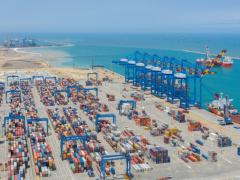
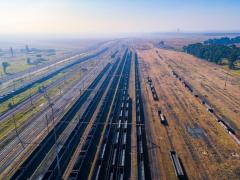
Rising global demand for critical minerals is driving increased investment across the Copperbelt, particularly in mining, infrastructure and energy. According to Duncan Bonnett, partner at Africa House, both Zambia and the Democratic Republic of the Congo (DRC) are seeing a surge in development. “On both sides of the Copperbelt, there is a lot happening. Global demand for critical minerals, including copper and cobalt, is pushing activity, but there are also other minerals such as tin and manganese,” he said. The DRC, already the world’s second-largest copper producer, reached output of around 3.3 million tonnes last year, while Zambia is approaching one million tonnes and is expected to increase production further. This growth is being underpinned by significant investment, both in expanding existing operations and developing new greenfield projects. “Wherever you go, there is a lot of excitement, with new mines coming online and existing mines expanding,” said Bonnett. “Alongside that, there is also substantial current and upcoming investment in logistics networks.” A key focus is the development of regional corridors, particularly the Lobito Corridor, which links mining areas through Angola to the port of Lobito. “The infrastructure dividend is starting to come into play,” he told Freight News. Energy remains a central constraint, however. Bonnett said that mining companies across the Copperbelt estimated that an additional 1 500 MW of power could potentially allow production to double. “There is a real push among mining companies to rehabilitate old hydropower plants and introduce solar and battery storage into operations.” Large-scale projects are already under way, including around 400 MW of new capacity at the Kamoa mine, while smaller mines are exploring 50 to 80 MW of self- generated solar and battery storage solutions. At the same time, the region is grappling with how to leverage its central role in the global energy transition to drive industrialisation. “The conversation often focuses on building batteries and electric vehicles locally,” said Bonnett. “But demand for electric vehicles in Africa remains very small compared to China, the US and Europe. Building that kind of infrastructure locally, only to export it, may not make sense.” Instead, he pointed to opportunities in developing upstream industrial capacity. “If you look at the inputs into mining, many of these are less technology-intensive – such as chemicals and structural steel – yet they are largely imported,” he said. “Mines require between eight and ten million tonnes of chemicals. There is an opportunity to manufacture these inputs locally, but investment in this regard remains limited.” LV
Substantial investment in logistics corridors
Comments | 0