Support on the ground has been “fairly overwhelming” for the newly formed breakaway body for the freight forwarding industry, spokesperson Jonathan McDonald has said on the eve of the first meeting of the South African Freight and Logistics Association (Safla).
He said support for Safla extended “from the bigger players all the way down to the smaller players”.
Whereas the inclusion of Durban port expert Dave Watts remained unconfirmed until recently, the logistics veteran from the South African Association of Freight Forwarders (Saaff) confirmed on Tuesday that he had made his services available to Safla.
Previously, the manner in which Watts and other senior consultants were informed by Saaff of their contract terminations, caused animosity among regional branch ranks.
This decision, in addition to the closure of the Executive Committee (Exco) leadership structures of the Western and Eastern Cape as well as KwaZulu-Natal, ultimately led to the formation of Safla on the basis of resisting Saaff’s centralisation of decision-making away from the regional ‘chapters’.
Speaking ahead of the March 8 inaugural meeting, McDonald said Wednesday’s meeting “is all about firming up everything”.
“There’s a lot to do for us to actually open as an association. Once we have done what is required, the minutes of the meeting will be submitted to the South African Revenue Service in order to open banks accounts and sort out registration.”
Officially electing representatives for the new body was expected to happen at the next meeting in about two weeks’ time, McDonald said.
Asked if a split from Saaff could still be avoided, he emphasised that it was too late.
“Saaff has a completely different strategy and outlook from what we want to achieve.”
Forming Safla after Saaff decided to disband the Excos, “has been done because they’ve gone in a different direction and they’ve left a gap that is negatively impacting industry at the moment”.
He explained that a case in point was the suspension of Port Health services at OR Tambo International Airport last week ahead of the Easter weekend.
Forwarders and cargo owners that Freight News spoke to at the time, said the decision to suspend services for three days from Monday, March 31, had created serious administrative backlogging.
On Thursday, April 2, Port Health officials were back at work following systems-migrations training, until noon when operations shut down for the long weekend.
Internal communication from Saaff confirmed the situation.
“Granted, having the entire staff contingent on training was not ideal,” but was “indeed a necessity for the migration,” a Saaff official said.
He added: “The short-term frustration will be outlived by longer term efficiency gains.”
This official, whose name is known to Freight News, never responded to requests for information last Thursday.
McDonald said Safla would have handled the Port Health matter differently.
“You can’t bring supply chain to a complete halt. That never makes any sense.”
For Saaff to allow this to happen had been “the wrong approach,” he said.
“They should have at least allowed for skeleton staff for shipments to continue.
“You can’t hold up trade just for training,” he said.
Getting stuck in and getting things done as a matter of urgency is exactly where Safla intends to make a difference, he added.
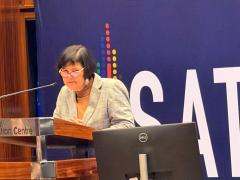
McDonald and various other former Saaff members, including erstwhile chief executive officer Dave Logan, tipped to head up the new association, have routinely argued that the involvement of Saaff CEO, Dr Juanita Maree, on the National Logistics Crisis Committee, had brought about a shift at the association.
Saaff used to be known for getting directly involved in issues on the ground as they evolved, and it’s widely argued that this function has been compromised because of dissolving the Excos.
Maree denies this but also refuses to provide any further comment to Freight News.
Getting involved without delays in matters such as last week’s Port Health issue illustrated the need for a new association, McDonald said.
“It's about adding value where Saaff no longer sees themselves wanting to play because it's not high enough up the chain,” he said.