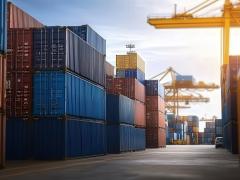
Just as ‘no man is an island’, Africa, almost totally dependent on ocean-borne freight for survival, finds itself in much the same boat and is remarkably still the only continent without a sound maritime strategy in place. Indeed, two of the major conclusions of ‘Maritime Development in Africa’ – a new discussion paper by The Brenthurst Foundation – are that Africa has to begin to take the lead in controlling its own maritime domain. It needs to foster partnerships with global players and established commercial institutions (the oil industry for example) in the interests of maritime security. Produced in partnership with the African Union Commission in Addis Ababa and the African Centre for Strategic Studies in Washington DC, it concludes maritime security is a key component of collective security and thus forms part of the foundation for economic development. “Africa is the only major region in the world that does not have its own maritime policy or strategy, despite the acknowledged importance of this component in any national or regional economy. Africa has however yet to decide on the relative importance of its maritime environment against competing priorities – and allocate the requisite resources to ensure that it remains an asset. A key finding of the paper is that the importance of maritime trade to the economies of African states – 54 of which 39 are either littoral (on the sea shore) or islands – and its potential contribution to economic development through the creation of employment, can be demonstrated by one simple statistic. Almost 91% of volumes went by sea in 2008. “There is no alternative given the nature of the imports and exports and the totally inadequate overland infrastructure. “The present rate of degradation of the road systems in Africa, in spite of conscious efforts to improve them, means that coastal trade is going to grow – supplementing the expected growth of international trade in commodities.” Africa’s fishing grounds provide the single source of protein for the majority of its population but the coastal waters are being “pillaged and polluted” and the marine environment destroyed. “If these illegal and irresponsible acts are not stopped, Africa (the second biggest landmass after Asia) will starve. Very soon there will be no more fish. “The population is increasing, and agriculture is no longer able to provide sufficient food. Moreover the importation of food is unaffordable because the continent is becoming progressively poorer due to its inability to compete in international maritime trade.” What is more, suggests the discussion paper, there exists an overriding need for a formalised legal framework at continental level while in the long run, it is intra-African maritime partnerships that will determine Africa’s capacity to address her maritime challenges. Alluding to the threat of piracy in the Horn of Africa, it says the lack of resources and of a comprehensive African-owned maritime security strategy has obliged the continent to ‘outsource’ many aspects of its maritime security to international or ‘external’ organisations. Indeed the global community is driving the anti-piracy strategy and providing the naval resources to address them. In conclusion, the paper says the danger of addressing an all-inclusive maritime strategy at the outset that would benefit the economies of the continent, will appear and prove to be complex and daunting, reducing its chances for success. “Developing and implementing a comprehensive African maritime strategy is not something that can be done overnight. It needs to be a consultative process and one that is rooted in the ethos of collective security and development. “There can be no prescriptive formulas; there is no silver bullet.” • Founded by the Oppenheimer family in 2004, The Brenthurst Foundation is on the forefront of innovative development thinking and knowledge in formulating strategies and policies for strengthening Africa’s economic performance.
Sound maritime strategy key to Africa’s development
Comments | 0
© Now Media. This content is protected by copyright and may not be adapted or republished. If you would like to discuss cooperation opportunities, please contact: editor@freightnews.co.za.