While most
logistics
business owners
are serious
about keeping up to date with
evolving dangerous goods
handling and transportation
regulations, those who try to
cut corners on training risk
crippling their companies
financially.
Elfrieda Diedericks,
founder of Bumbene
Safety Consultants, a Tetaaccredited
training institute
and SAATCA-registered
lead auditor, said some
companies saw it as a cost
saving not to send all staff
working with dangerous
goods for sufficient training.
“In my opinion this is a very
dangerous zone as it comes
down to a lack of knowledge
on the company’s side. The
safety knowledge, wellbeing
of employees and legal
requirements and regulations
regarding dangerous goods
remain the employer’s
responsibility at all times,”
she said. “Companies don’t
understand the implications
of failing to provide sufficient
funds and proper training for
their employees.”
Diedericks added that the
costs of an environmental
disaster far outweighed
the expense of regular staff
training.
“These cost could cripple
a company, not to mention
the legal complications,”
Diedericks said.
However, she said some
managers mistakenly assumed
that employees who had
many years of experience
handling dangerous goods
did not need training.
“Managers and owners
sometimes believe that
employees are competent
after annual training has
been completed and that no
further awareness or internal
communication is needed
regarding the handling of
dangerous goods, such as
conducting PTOs, surveys,
risk assessments to ensure
competence and the good
management
of handling of
dangerous goods
and disposal,” she
said.
Courses such
as the journey
management plan
(JM) and route
risk assessments
(RRA) for truck
drivers conveying
dangerous goods
should be done
more frequently,
while more
personnel should
be encouraged to attend
Hazards Identification and
Risk Assessment (HIRA)
and Hazchem emergency
reaction courses to improve
controls and action plans that
could save lives and money by
providing knowledge of how to
prevent disasters.
“Sometimes companies
are willing to train their
employees but employees
are reluctant to develop
themselves. And
as the transport
industry is a
fast moving
industry, it’s also
a challenge to
be as flexible as
possible to find
time for employee
training.”
Diedericks
said it was also
important for
business owners
to regularly
assess working
conditions to
ensure they met occupational
health and safety standards
and to ensure that only
accredited training providers
were used to ensure quality
training.
INSERT
Companies don’t
understand the
implications of
failing to provide
sufficient funds and
proper training for
their employees.
– Elfrieda Diedericks
CAPTION
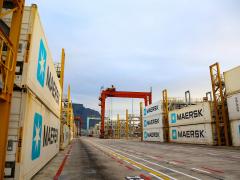
The costs of an environmental disaster far
outweigh the expense of regular staff training.
‘Skimp on training at your peril’
Comments | 0
© Now Media. This content is protected by copyright and may not be adapted or republished. If you would like to discuss cooperation opportunities, please contact: editor@freightnews.co.za.