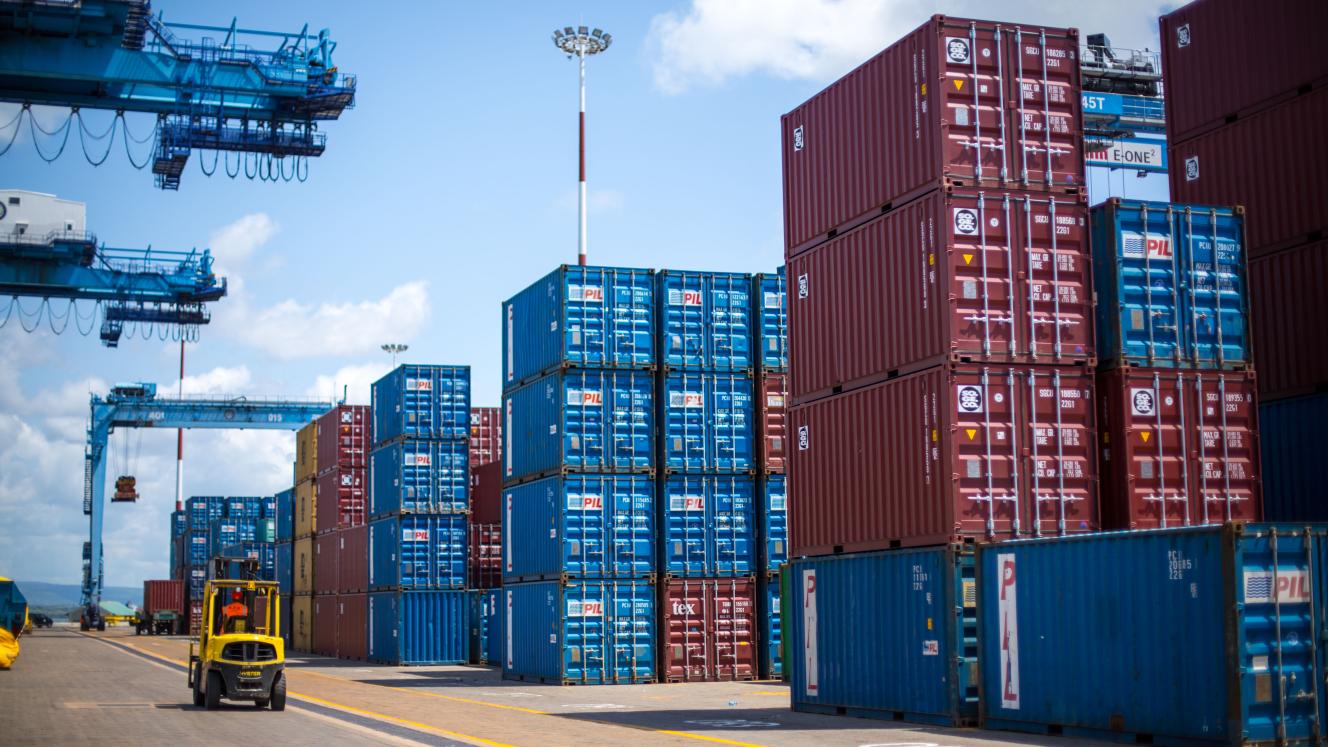
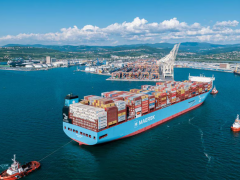
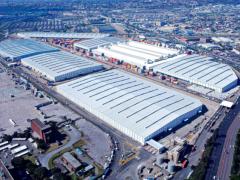
How do you escape the congested roadways around the terminal areas of the port of Durban, the almost total non-availability of vacant land, and the terrible delays and frustration that these lead to? “Get out of it,” said Mark Holbrook, MD of SA Transport Investments (Sati) Container Services in Durban – part of the AP Moller-Maersk group’s landside transport subsidiary in SA. His company did just that when in 2003 – to overcome the lack of land space in the port region and to avoid the traffic jams that are an almost perpetual occurrence in the access road system – it established its latest container depot 26- kilometres south of the port. This was built in a 24/365 securityprotected industrial/business park near Umbogintwini south of Durban on a 60 000 m2 site “with lots of room for future expansion on land that we’ve already acquired,” Holbrook told FTW. “Our intention was to run a full-scale, road and rail-served container depot on land that we owned,” he added. “At that stage, our old depot had well outgrown its site, and there was just no land available round the port. “Indeed, it was a point of contention, whether we needed to be near the port, or not.” But the logic of the shift away from the overcrowded port area has been proven by the Sati depot’s current capacity figures. It can handle up to 1 000 TEUs a day, which gives a maximum monthly throughput capability of about 18-20 000 TEUs. “Talk about a depot near the port of Durban handling those sorts of volumes, and you’re talking about complete jamup potential. Being away from the port relieves us of these congestion worries.” Trucking operations moving containers in-and-out of the depot have to balance the extra distance against their potential time and wear-and-tear savings in avoiding congested roadways when servicing the depot. “The other advantage,” said Holbrook, “is that from the N3 highway – the main cargo traffic artery between Johannesburg and Durban – there is a direct link to our depot area using the N2 freeway. “The truckers don’t have to travel through the gridlock traffic in the central business district (CBD), nor the impossible congestion on the sole access road to-and-from the terminal area south of the port.” There’s also the added bonus of the depot being fully rail-served, with a rail siding capacity of 20 TEUs – and a direct link to the Transnet Freight Rail (TFR) national rail network. “This means we can move containers or cargo anywhere in the country,” said Holbrook. “For example, we’re currently moving 40 to 50 block loads of reefers (refrigerated containers) to eastern Gauteng. These are empty boxes for the export packing of the fruit crops in that area.” Although the railways are already providing a valuable additional transport mode for the depot, Holbrook bemoans the fact that rail could be a lot better – “If TFR could only got its act together”.
Shift away from port makes practical sense
Comments | 0
© Now Media. This content is protected by copyright and may not be adapted or republished. If you would like to discuss cooperation opportunities, please contact: editor@freightnews.co.za.