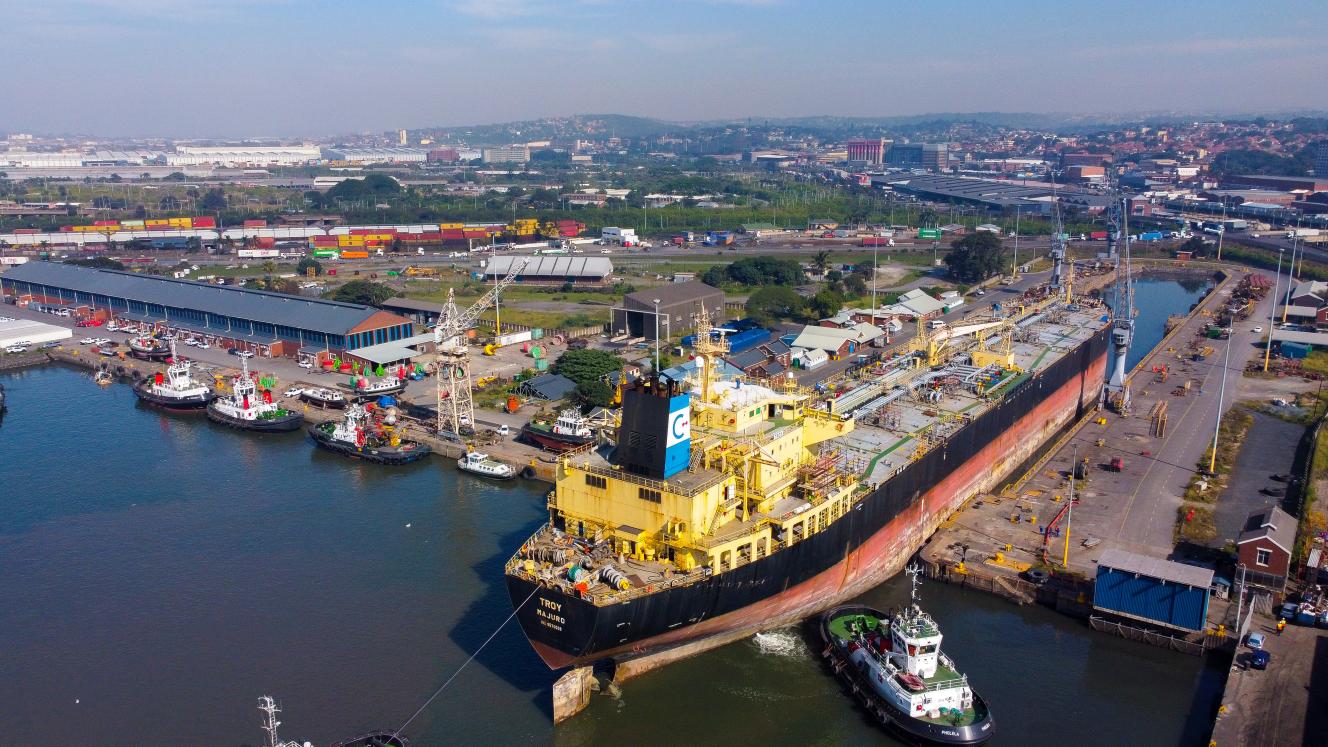
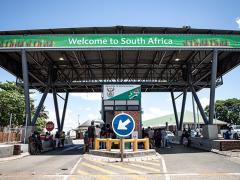
SA as the gateway to Africa for both trade and investment is a concept that is now built on what are proving to be ever-shakier foundations. Indeed, the consensus of thinking at the moment would seem to indicate that it is well on the way to collapsing. Still on the pro side was Jean- Guy Carrier, secretary-general of the International Chamber of Commerce (ICC). Speaking at the annual convention of the SA Chamber of Commerce and Industry (Sacci), he said: “Although SA faces a number of challenges, it is still seen by the world as the gateway to the African continent and is looked upon for the direction in which emerging economies are moving.” This was backed up by public enterprises minister, Malusi Gigaba, recently in the UK to drum up support for financing state-owned enterprises (SOEs). He had been told by CEOs from China that they saw SA as the investment gateway to the rapidly growing African market. Also, they added that the integration of the Southern African Development Community (SADC), Common Market for Eastern and Southern Africa (Comesa) and the Eastern African Community (EAC) would open up a sub-Saharan behemoth free trade area of 500 million people when agreed, and SA would be one of its major drivers. And attempting to sell the concept, Mandisi Mpahlwa, SA’s ambassador to Russia, said, according to a statement from the trade and industry department: “SA should be used as a gateway into Africa so it can create business links and opportunities for the continent. But, in numbers, the con side currently carries much more debating weight. Like the UK publication, The Economist, asked: “Is SA, still undoubtedly Africa’s most powerful and sophisticated country, doing quite as well as it claims? “Used to being top dog in almost everything in Africa, SA has been slipping down the league tables. In 1995 it accounted for almost half of sub-Saharan Africa’s GDP; today it claims less than a third. Although its economy grew at a robust 5% a year in the four years up to 2009, it has managed barely 3% since then, making it one of the slowest-growing in Africa. Its taxes are high, education is poor, and its rapid growth in real wages is outstripping productivity in almost all sectors. Foreign investment has been declining.” Researchers Peter Draper and Dianna Games, writing for the Trade & Industrial Policies Strategy (Tips), an independent, non-profit economic research institution, said: “SA’s economic dominance in Africa and in the southern African region is an accepted fact but its role in the continent has long been contested. “The recent admission of SA into Brics grouping came with many discussions and debates on its role as a ‘gateway’. “However, as it struggles with chronic unemployment and poverty problems, questions arise as to the potential and possibility of SA being a gateway into Africa.” Our local publication, the Mail & Guardian, also carried an editorial that was strictly anti. “There are many reasons why SA should not be considered the world’s gateway to Africa,” said the report. “As different countries and regions in Africa continue to improve their individual competitiveness, the need for a gateway is being diminished. Proposing SA as a gateway implies that African countries are not capable of accessing the world, which is not the case. African countries are making great strides to integrate into the global economy. “Other countries are also eliminating barriers to trade. If SA does not improve its competitiveness, it might flounder.” And, at a recent press conference in Johannesburg, DA finance spokesman Tim Harris warned that SA was in danger of losing its status as the gateway to Africa. A DA document released at the press conference referred to increasingly tough competition from neighbouring countries “many of which are showing signs of much stronger growth than we are”. To compete, SA would have to make key reforms. “Trade is hampered by arduous regulations and an unfocused trade strategy. According to the World Bank’s Doing Business report, our country ranks 144 out of 148 countries.” At the same time, SA’s position as the launch-pad for global companies into Africa is being threatened by other countries that are rolling out red carpets for investors, experts and business leaders are warning. SA is falling behind its neighbours in terms of its relative competitiveness, with the biggest shortfalls stemming from increasing structural constraints, Business Unity SA said in a paper posted on its website. Michael Jordaan, CEO of First National Bank, was quoted in Business Report as having said: “We need to up our growth game, not only to reduce unemployment but also to keep our gateway status.” Meanwhile, Dr Jacqueline Chimhanzi, Africa Desk, Deloitte Consulting, said: “One such ‘truth’ is the commonly used phrase ‘SA is the gateway to Africa’ and, interchangeably, ‘SA is a springboard into the rest of the continent’. “These phrases somewhat imply that foreign companies would set up in SA while surveying the landscape in the rest of the continent before deciding which markets to enter. “On closer examination of the facts, this ‘truth’ does not hold water and quickly unravels.” And the Trade Law Centre (tralac) carried an article written by Roy Downing of Business Day. It said: The ‘gateway to Africa’ title no longer belongs to SA as it no longer exists from a trading perspective, according to Stanlib emerging market economist, Xhanti Payi. “Due to developments and upgrades in various ports around Africa, it has become possible for international companies to do business with those countries directly, rather than gaining access through a ‘gateway’ such as SA,” he said. “Also, SA’s geographic position makes it difficult to trade with other African countries situated further away on the continent.” CAPTION ‘Upgrades at ports around Africa make it possible for international companies to do business with those countries directly, rather than gaining access through a gateway such as SA.’
SA's gateway status on shaky foundations
Comments | 0
© Now Media. This content is protected by copyright and may not be adapted or republished. If you would like to discuss cooperation opportunities, please contact: editor@freightnews.co.za.