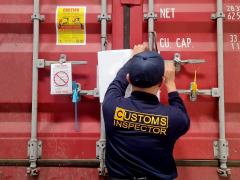
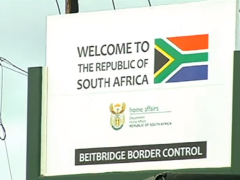
Despite the protestations by SA Revenue Service (Sars) that its customs’ complement remained about 80% staffed during last week’s strike, two of SA’s main cross-border trade arteries came close to closure, according to border post users. The Beitbridge border post between SA and Zimbabwe and the Lebombo post between SA and Mozambique were noticeably affected, and strike organisers seemed to have targeted these two to highlight their workers’ complaints. By Wednesday last week, although Sars was confident about staff attendance, saying it had all sorts of contingency plans in place to meet industrial action, FTW was already getting incoming calls of complaint from landside border post users. A first was from an anonymous but emotionally distraught cross-border truck owner. Two of his trucks, he told FTW, had been jammed in a queue of commercial vehicles at Lebombo for 24 hours. His drivers were stuck and having big problems getting food, and didn’t know when they were going to get clear. “One of my drivers was talking to a couple of strikers,” the trucker said, “and were told that they (the strikers) didn’t know when they were going back to work, but a few of them were going back to the township for a long weekend, and didn’t intend to come back to work till next Monday.” However, although there were continuing complaints of slow going at the post right up to this Monday, the strike there didn’t seem to get the same concentration of strike effort as Beitbridge. On Wednesday last week Brian Kalshoven, MD of Beitbridge Border Clearing Agency, told FTW that processing documentation was not too bad, but clashes between police and strikers were certainly delaying trucks. “Customs is not working as it would with a full complement,” he added, “and acquittals and the like are very, very slow.” Kalshoven had also heard stories then that demonstrators were due to be bussed in on Friday to heighten the protests (a rumour that was eventually confirmed by news releases on the Friday). “Beitbridge has definitely been hard hit,” said Barney Curtis, executive officer of the Federation of Southern African Road Transport Associations (Fesarta). No actual full-scale strike was taking place, he added, but staff was just not working at fullrate – and processes were being slowed up and queues of trucks were getting longer and longer. At the same time, Curtis was told that Sars was shifting staff from small border posts – which were themselves resultantly closed – to try to staff up the major border posts. But whether this worked is dubious. Both Kalshoven at Beitbridge and an FTW contact with firsthand knowledge of Lebombo agreed on Monday that, while the people were there as a presence, they were grinding things out prodigiously slowly. Said Kalshoven: “On Saturday, all the Sars staff looked to be back at work, but still processing very slowly. There’s now (Monday) a big backlog (some 40-50 trucks) standing waiting at the gate.” But the other areas of freight transport seem to have got off lightly. Although there were occasional glitches, both airfreight and seafreight seemed to be going relatively smoothly – although commentators were hesitating to give Sars thanks for their contingency plans. “I have not heard of any disasters,” said Alwyn Rautenbach, MD of Airlink cargo and chairman of the Air Cargo Operators’ Committee (Acoc). “Land borders seem to have been affected, but not the air cargo industry – except some slight delays.” But, Rautenbach added: “Everything in the air cargo industry is handled electronically, and the machines are not on strike.”
Sars strike knocks border clearances
Comments | 0
© Now Media. This content is protected by copyright and may not be adapted or republished. If you would like to discuss cooperation opportunities, please contact: editor@freightnews.co.za.