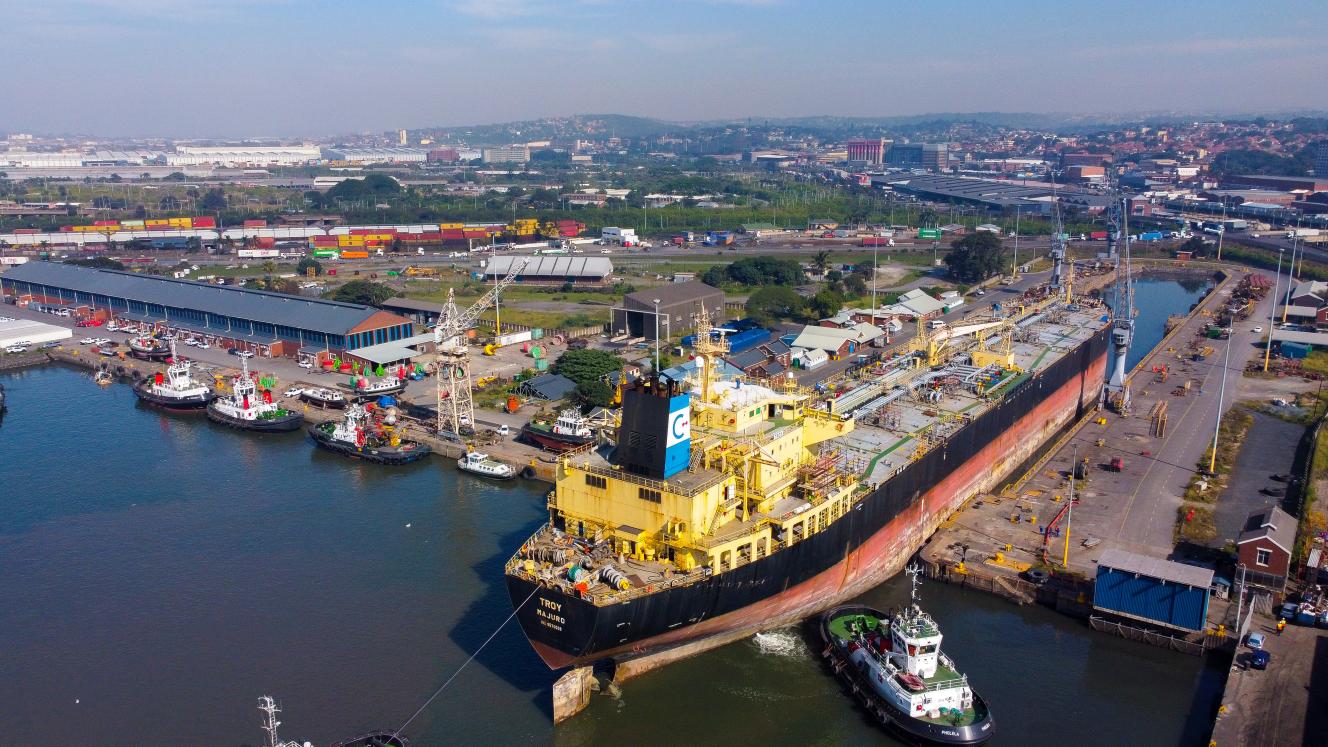
Why does the SA Maritime Safety Association (Samsa) appear to be now operating as a profit-making business? That was the question asked by Sello Rasethaba of shipping line MSC at a presentation on Samsa levies made at the Business Unity SA (Busa) offices in late November. This was after Samsa entered a submission questioning the 18.06% proposed increase in port tariffs by Transnet National Ports Authority (TNPA) for tax year 2012/13, but conveniently seemed to forget that it had implemented a 318.95% increase itself in 2009/10. “What justifies the 318.95% increase?” asked Rasetheba, “and why does Samsa have R134 243 000 cash reserves recorded for 2010/11? These are queries that are worrying the SA shipping line industry, because Samsa levies are imposed on the tonnage of each vessel, rather than per vessel, as might be expected. This equation – vessel tonnage divided by 100 tonnes multiplied by the levy – means that big container ships and cruise ships fork out amounts approaching R100 000 per arrival at an SA port. It should also worry cargo owners or passenger agents, as this extra cost is likely to be included in freight rates or cruise costs. SA ports are currently among the most expensive in the world, said Rasethaba. “The Samsa increase can only contribute to this.” Meantime, MSC has sent a rebate proposal to Samsa but has not received any response, and is now investigating the possibility of court action to answer its questions. To find our own answers to what this issue might entail, FTW approached one of our own band of legal experts on maritime matters for advice. The first issue, he said, was whether they had followed the correct procedure before imposing the levy hike. And the answer, he added, appeared to be: No! “According to the Samsa Act and the Samsa Levies Act, they are supposed to present a business plan to the minister (of transport), which they didn’t do in advance.” Admittedly, our legal eagle added, Samsa has had a couple of pretty costly exercises in recent times. They were the salvaging of the Panamanianregistered bulk carrier Seli 1, which ran aground in stormy weather near Blaauwberg in the Cape in 2009; and hauling the grounded tanker, Phoenix, off the rocks at Sheffield Beach north of Durban last year. “But they are supposed to get this money from the government by special vote.” The second issue surrounds any cruise vessels based in SA waters for the season. Samsa has exempted government vessels, coasters and fishing boats from the levy, and only imposes the levy on freighters on their first port of call in SA waters on each round voyage. “There is logic in this, because the levy is applied every time a vessel arrives at an SA port. But, when you come to cruise vessels, like MSC’s Symphonia, she is a large vessel and attracts a large amount for a levy every time she returns to SA waters after her cruises to other ports on the African east coast. “So Samsa is not applying the levy logically.”
Samsa levy increase raises industry concern
Comments | 0
© Now Media. This content is protected by copyright and may not be adapted or republished. If you would like to discuss cooperation opportunities, please contact: editor@freightnews.co.za.