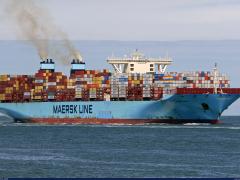
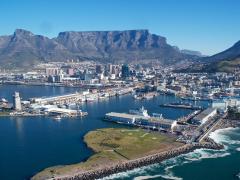
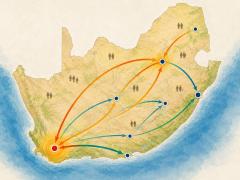
Heartening news for the Western Cape fruit industry and its many players in the production chain, is that the region’s reefer exports are expected to perform well this year. Safmarine reefer executive, Jan Kruger, tells FTW the carrier’s reefer exports got off to a good, strong, early start despite the downturn in the global economy. An indication of this positive trend was the launch in February of the Saecs Reefer Express – operated by one vessel apiece from Safmarine, DAL and Maersk Line – which in no way changes the existing profile of the Saecs intermediate service, currently operating as a fortnightly, four-vessel service. Favourably received by the perishable export industry, the fledgling service will also offer much-needed capacity for dry cargo exported in 20-foot GPs, though such volumes exported from the Western Cape declined in the last quarter of 2008 and are expected to continue on similar lines for much of 2009. Even though the range of perishable products exported out of South Africa has expanded, Safmarine does not expect too many changes in the overall mix, given the dominance of crops such as apples, oranges and pears. Citrus and deciduous currently account for approximately 55% and 40% of all export volumes, the remaining 5% made up mainly of avocados, meat and fish. Strong export growth has been reported in flower and vegetable exports, much of it airfreighted. Safmarine has also noted an increase in the volumes and types of perishable produce previously airfreighted or trucked now being shipped by sea. Safmarine’s reefer volumes from South Africa were up in 2008, declining slightly in December. The carrier estimates that 75% of the country’s core fruit export trade to Europe was being moved in containers by the end of last year, though the trend of moving by conventional mode to reefer containers has not continued at the same pace as before. What is more, the diminished availability of conventional vessels will likely continue to drive the demand for reefer containers, which offer a number of advantages over conventional modes of shipment. Key to these is that the per unit carbon emission/footprint tends to be lower by sea than air or road. Indeed, Safmarine expects environmental issues to have more influence on the reefer shipping business and on sourcing programmes in general, and is making its contribution in this respect by investing in new reefer equipment with the most fuel-efficient compressors and environmentally friendly refrigerants. The line is also working closely with its customers to address environmental and carbon footprint concerns. Total containerised reefer exports from South Africa (all shipping lines, all reefer exports) continued to grow in 2008 as the trade showed single digit growth over the previous year. Trade lanes performing particularly well were the South Africa to Middle East and South Africa to Europe trades, as well as all trade to West and East Africa, intra Europe and South America. While the downturn in the global economy was felt, particularly at the end of 2008/early 2009, Safmarine remains cautiously optimistic it will reach targets set for this year. “People may postpone buying a new car during rough times but they still have to eat,” says Marc Rooms, reefer marketing for Safmarine’s Antwerpbased trades. Safmarine expects 2009 to be year of consolidation for its reefer business, its principal focus being on consolidating the custom it has built up over the years, while also aiming to increase reefer liftings in existing markets.
Safmarine
Comments | 0
© Now Media. This content is protected by copyright and may not be adapted or republished. If you would like to discuss cooperation opportunities, please contact: editor@freightnews.co.za.