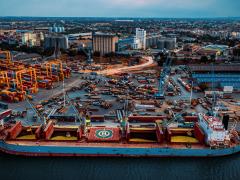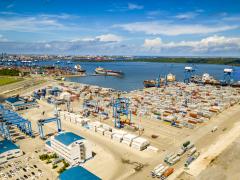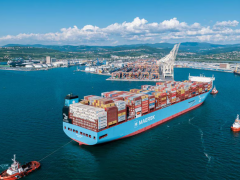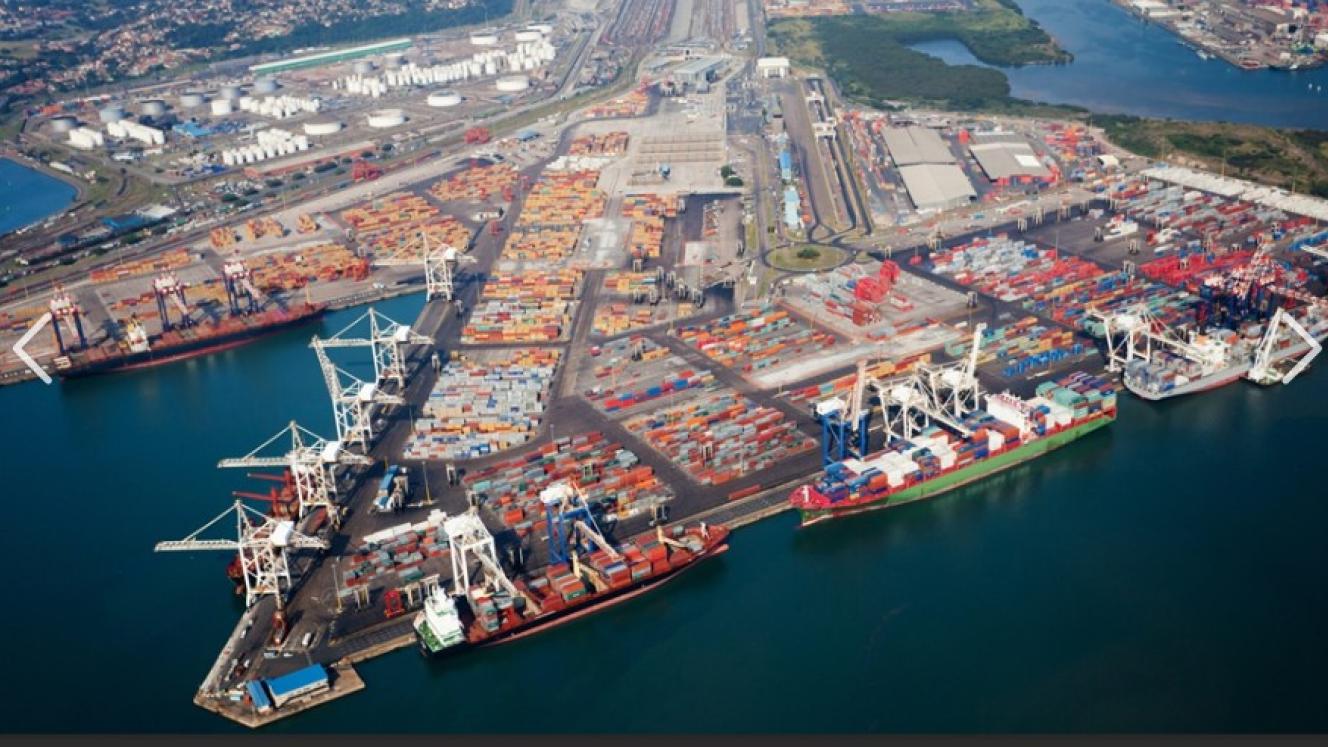
Durban handles roughly 70% of South Africa’s seaborne freight and agents generally believe they can effectively deal with issues at the problem-prone port thanks to regional representation as members of the SA Association of Freight Forwarders (Saaff).
But there’s a perception that recent structural changes implemented by Saaff’s head office in Johannesburg could undermine the hands-on capacity to immediately address cargo complexities on the ground, thanks to the insights of consultants who have devoted their careers to working with specific ports.
One of the long-standing members who holds this view is Rex McGregor, a former regional chairman of Saaff’s KwaZulu-Natal chapter.
Speaking to Freight News after it emerged that Saaff National had decided to close down the Executive Committees (Excos) of the three regions, which include the Western and Eastern Cape, the fourth-generation freight forwarder said it was not clear what had led to this course of action.
McGregor, the director of a clearing and forwarding concern in Durban, said Saaff had a rich tradition of having knowledgeable professionals on the ground to represent member companies running into cargo issues – “and that happens on an almost daily basis.”
The termination-of-service letters issued to leading consultants, “leaves us in the dark as to what’s going to happen after April,” McGregor said.
“Nobody has told us how things will be done in future because we weren’t consulted. It’s unfortunate that the chapters have been closed down seeing as Saaff is known to have an open-door policy with its members.”
When told that it was not the branches themselves but the Excos that were closing down, McGregor said without local leadership and the expectations of now having to report to head office, the Durban chapter functionally didn’t exist.
Saaff chief executive Dr Juanita Maree has said that it’s not the case that regional representation will be eroded because of centralising countrywide control.
She said it must be understood that the ports had moved on and, although Saaff National was immensely grateful for the service it had received from the consultants based at the ports, it was time for the association to grow with the times.
McGregor said it would have cleared up a lot of uncertainty for Durban’s members if information had been properly disseminated.
“If you phoned 10 freight forwarders today, I don’t think any of them would know what’s really going on. No one seems to know what the way forward is, and that’s concerning.”
He said in the offices of ADB McGregor and Co, there was a picture of the company’s founder and his great grandfather when they joined Saaff in 1938.
“It think it was called the South African Shipping and Forwarding Agents’ Association back then and, through the years, we remained members because of what Saaff means for our industry, especially when we need help.”
Much of this hinges on immediate trouble-shooting, which members like McGregor fear could now be compromised because of the Excos’ closure.
“I think local representation is invaluable. You must have someone locally that is connected with the various points where you might have a problem. To do this you need local experts with experience that have the contacts and ability to tackle problems head on.”
Maree has said that the perception that this will no longer be the case and that Saaff National is becoming detached form the close connection it used to have with its members, is incorrect.
She contends that it’s just the model that has changed, and through tightened control at head office, Saaff’s position as an industry lobby group on the National Logistics Crisis Committee is strengthened.