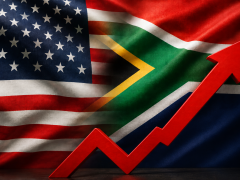
As the first salvos have been fired in a potential global trade war, economists believe South Africa lacks the ammunition to participate.
United Nations Conference on Trade and Development (Unctad) secretary-general, Mukhisa Kituyi, said the Trump administration’s import tariffs on steel and aluminium were strong grounds for retaliatory action by the rest of the world.
But being able to implement retaliatory tariffs relied on the leverage a country had on the international market and the influence it had on prices, Steel and Engineering Industries Federation of Southern Africa (Seifsa) economist, Michael Ade, told FTW.
“Most African countries don’t have this kind of leverage – except for South Africa and Nigeria – but they would likely not want to lose this power by enacting such tariffs.” However, he believes a trade war is imminent. “Several countries are going ahead with retaliatory tariffs against the US as a result of the steel and aluminium tariff increases implemented earlier this year,” he said.
“The European Union (EU) will soon go ahead with this, India has already slammed retaliatory tariffs on the US, while Mexico and Canada are currently looking at doing the same.” Senior business economist Richard Downing told FTW that going down this avenue would be a problem for smaller countries and would affect each country differently, depending on their influence in the international market.
“You have to consider whether you are competitive enough in the global market to implement and enforce retaliatory tariffs; do you have the level of trade that would allow you to do that?” he said. “What would we even retaliate with? Gold? We can’t really do that, with commodities we have no choice but to follow world trends.”
Trade and agricultural economist, Tinashe Kapuya, believes one of the major reasons why South Africa does not have any leverage is its trade and preferential agreements with much larger and more developed economies.
“The US has influence over South Africa because of the African Growth and Opportunity Act (Agoa), especially with its new provisions, which means that the US has the ability to exclude us from the agreement at any time. And that’s highly likely if we were to increase tariffs,” he said. “If this were to happen, not only would it negatively affect the automotive sector, but macadamia and wine exports would also suffer.”
Ade agreed that because of Agoa South Africa had more to lose than to gain by hiking tariffs. And increasing tariffs is not a simple exercise. Since South Africa negotiates all trade agreements as part of the Southern African Customs Union (Sacu), this means that whatever happens in or affects South Africa also affects the other four Sacu countries.
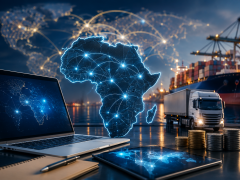
Additionally, he pointed out that Africa was in the process of trying to reduce tariffs through the negotiation of the African Continental Free Trade Area agreement. He said that South Africa’s participation in a global trade war would negate all work towards trade liberalisation on the continent.
“A global trade war will kill competitiveness in the manufacturing sector by increasing the selling price and placing South African products at a disadvantage as competitiveness is not just dependent on quality but on tariffs as well,” said Ade. “Export volumes have already gone down and excess capacity will result in a decline in demand which will lead to machinery and workers sitting idle as productive efficiency falls.”
Downing noted that it would be much better for South Africa to resolve any issues through the World Trade Organisation (WTO) and that tariffs should only be used when there were concerns of dumping of products.
INSERT
The US has influence over South Africa because of the African Growth and Opportunity Act, especially with its new provisions. – Tinashe Kapuya