Logistics companies and renewable energy manufacturers are breathing a sigh of relief after the longawaited signing of of 27 new renewable energy independent power producer (REIPPP) projects by the Minister of Energy, Jeff Radebe last week. The agreements total R56 billion in investments which will add 2 300 megawatts of power generation capacity to South Africa’s power grid over the next five years.
South African Renewable Energy Council (Sarec) chairperson Terence Govender pointed out that the delays around the signing of the power purchase agreements had “negative knockon consequences” not only for publicprivate partnerships in other infrastructure sectors but businesses – including the transport and logistics sector – that had invested in services and equipment in anticipation of the deals coming through.
FTW has carried several reports over the years about local and international companies who have invested in additional project cargo services to serve the projected renewable energy logistics boom in southern Africa as a result of government’s REIPPP. Meanwhile, investors in special economic zones and manufacturing hubs, such as the Coega Development Corporation, faced closure and job losses as they waited anxiously for the agreements to be signed.
Sarec even sought legal advice last year on this issue, pointing out that R200 million in investments were on hold as the delays dragged on. During the signing ceremony Radebe acknowledged that the more than two-year delay in signing the deals had had a negative impact on both the renewable energy sector, as well as on investor confidence. “We have reached this milestone following a long period of uncertainty, not only for the renewable energy industry, but also for private sector investment in the energy sector as a whole. This has not been good for investor confidence in our country or for the management of the economy. Radebe added that new foreign and local direct investment provided a strong economic growth impetus in support of an economy wanting to lift its head at a time of severe fiscal constraint.
“This investment will certainly have a positive effect and contribute to the much needed jobs in the rural areas where these projects are located.” Radebe pointed out that in most of the bid rounds, the Northern Cape would receive the majority of the investment with 15 new wind, solar PV and CSP projects. The Eastern Cape would see another four new wind projects with the same number of new projects earmarked for the North West province. “The Western Cape will add another two wind projects to their portfolio, while Mpumalanga will have its first IPP project and the Free State is adding one small hydro project to their portfolio,” he explained.
The South African Wind Energy Association’s Brenda Martin welcomed the move saying: “The benefits are directly linked into those provincial communities, like economic development and employment creation.” Chairman of Sola Future Energy, Chris Haw, said in a statement that the new initiatives would reduce the cost of electricity. “The signing shows that the government is committed to the country’s economic developments. Renewables are cheaper and more sustainable forms of energy.” Radebe added that renewable energy was an efficient way to minimise water consumption in the energy sector. “The projects, once fully operational and at maximum capacity, will save 9.6 million kilolitres of water per annum, compared to similar MW hours of electricity from fossil fuels.”
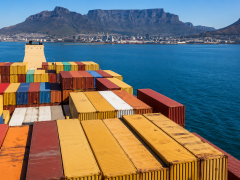
Caption: The Western Cape will receive the majority of the investment with 15 new wind, solar PV and CSP projects