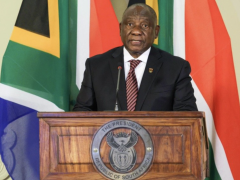
Zambia is positioning mining reform as a cornerstone of broader economic reconstruction, with a strong focus on investment certainty, infrastructure development and regional integration, according to its President Hakainde Hichilema. Speaking in Cape Town, Hichilema said the goal was not only to unlock the country’s mineral potential, but also to support logistics corridors, industrial development and inclusive growth across the region. He said Africa’s mineral wealth presented a clear window of opportunity at a time when global demand for critical minerals was continuing to rise, but warned that this potential would not be realised without stronger collaboration, regulatory clarity and deliberate investment in enabling infrastructure. “Resources alone are not enough,” said Hichilema. “We need skills, institutions, capital and partnerships that allow mining to translate into jobs, business opportunities and stable communities.” He said Zambia had made deliberate policy choices over the past three years to stabilise its economy and rebuild investor confidence following years of volatility. “In 2022 I attended the Mining Indaba as a newly elected president, sharing our mission, our plans for economic reconstruction and mining. We are now nearly four years down the road and we are making progress.” He said since 2022 more than $12 billion had been invested in the Zambian mining sector, driven largely by the reforms that had improved policy certainty, governance and the overall operating environment. Major investments cited include the $1.5bn expansion of First Quantum Minerals’ Kansanshi mine, projects by Barrick Gold of around $2bn, as well as the recapitalisation of Mopani Copper Mines by International Resources Holding (IRH) of more than $1bn. “What has been astounding to see and shows we are on the right path is the reopening of mines in the country that have been dormant for decades. All these investments are a direct response to the clarity and consistency that has been introduced.” He said capital flows were proven to flow more easily to jurisdictions with a clear vision and predictable rules, and Zambia remained intent on delivering exactly that to the mining sector at large. According to Hichilema, the establishment of a Minerals Regulation Commission alongside a functional mining tribunal has helped streamline licensing approval and dispute resolutions. Litigation, long a defining feature of the mining sector in Zambia, has also been significantly reduced. “Instead of spending time in court, we have brought all stakeholders to the negotiation table, where we work together to find solutions to the challenges facing the sector.” Hichilema said prolonged disputes and adversarial approaches came at a high cost, only adding to instability and uncertainty while increasing operational risk. “It makes far more sense for us to address issues collectively, otherwise the price is simply too high. Cooperation rather than competition between government, investors and communities is essential to building a sustainable and stable mining industry.” LV
Reforms drive investment in Zambia
Comments | 0
© Now Media. This content is protected by copyright and may not be adapted or republished. If you would like to discuss cooperation opportunities, please contact: editor@freightnews.co.za.