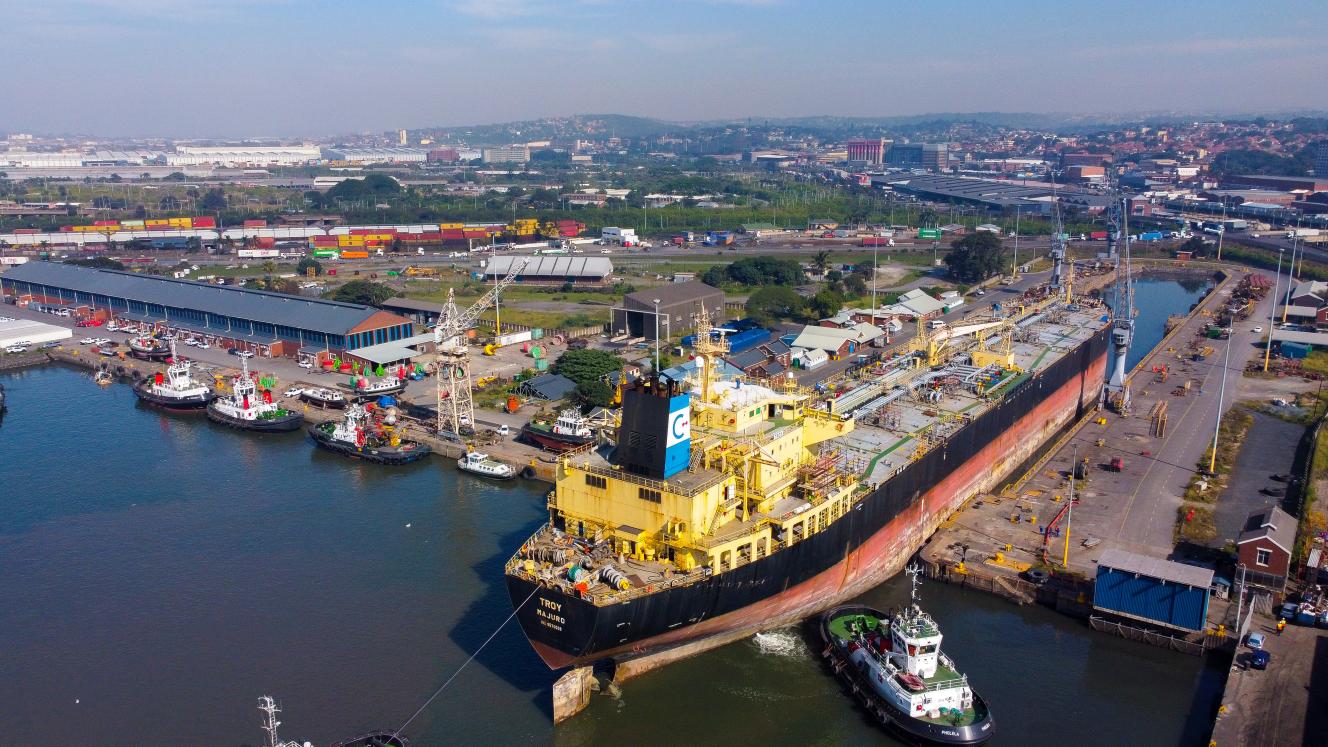
Improving operational reliability and efficiency across South Africa’s ports is a central priority for Transnet National Ports Authority (TNPA) in the year ahead, with targeted investments in marine services, infrastructure upgrades and traffic flow aimed at reducing congestion and improving vessel turnaround times. At the Port of Cape Town, the focus in 2026 is on strengthening operational efficiency across all commodities handled at the port. “A key priority is to reduce vessel turnaround times and ensure a reliable, on-time marine services offering by maintaining a full complement of marine fleet availability to effectively service the shipping industry. To support this, an additional tugboat is in the process of being procured, which will increase tug capacity from four to five tugs,” a spokesman told Freight News. At the Port of Mossel Bay, the upgrade of the slipway is a crucial operational and infrastructure priority, addressing long-standing inefficiencies and constraints faced by port customers. “The availability of a fully functional side slip allows for the simultaneous docking of multiple vessels, reducing congestion and waiting times. This enables operators to return vessels to service more quickly, ultimately improving turnaround times,” the spokesman said. At the Port of Saldanha, TNPA is reconfiguring the existing oil jetty to enable dual- side liquid bulk operations, creating Berth 104 as a key platform for liquid bulk diversification and energy transition. The reconfiguration will allow the safe handling of a broader range of products, including refined fuels, liquefied petroleum gas, liquefied natural gas and future energy carriers. According to the spokesman, the Port of Durban is prioritising improved operational efficiency and reliability, particularly in marine and berthing services. Key initiatives include reducing congestion through the Bayhead Road Rehabilitation project and coordinated traffic management, as well as strengthening marine services with additional skilled personnel and six industry- committed operational tugs. In Richards Bay, the focus is on the Port Road Rehabilitation Project to meet current and future traffic demands. Once completed, the new road infrastructure will accommodate approximately 1 600 multi-trailer trucks, doubling the previous capacity of 800 trucks. The spokesman said the primary focus at the Port of East London this year would be to attract increased cargo volumes across several key segments, including dry bulk, automotive imports and transhipment, and breakbulk. This will be supported by targeted infrastructure investments, including completion of the Latimer’s Landing Jetty and ongoing maintenance of the tanker berth. Through its current operating model, TNPA has established the ports of Ngqura and Port Elizabeth as a single port complex aimed at lowering the cost of doing business in the region. The authority is prioritising the procurement and installation of six hydraulic mooring units at the Port of Port Elizabeth, while 14 units are already operational at the Port of Ngqura. The two ports are also set to receive an additional tug and a pilot boat. LV
Reduced vessel turnaround times top the agenda
Comments | 0
© Now Media. This content is protected by copyright and may not be adapted or republished. If you would like to discuss cooperation opportunities, please contact: editor@freightnews.co.za.