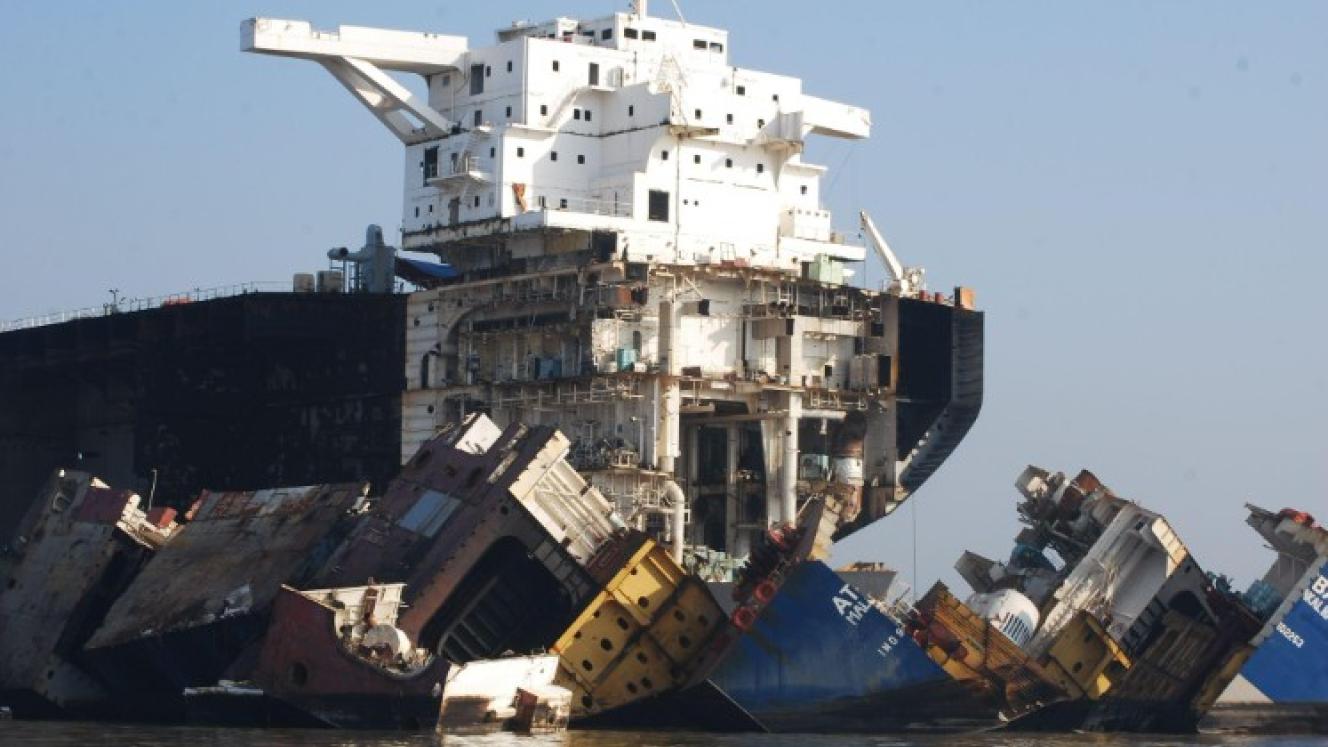
Vessel demolition is expected to increase this year as the global container fleet faces serious challenges – ocean rates on a downward trajectory, capacity re-calibration in relation to Red Sea risk reduction, and a bulging order book for newbuilds.
According to Shipping Intelligence Hub (SIH), as many as 633 newbuild orders were registered last year, totalling more than five million 20-foot boxes.
It heralds a 42% year-on-year increase in new TEU capacity, and took the global order book to well over 10 million, or at least 33% of the current fleet.
According to Xeneta chief analyst Peter Sand, “It’s as high as it’s ever been”.
The impact it was having on the liner trade, which was forced to push more vessels into East-West sailings because of Suez Canal avoidance and resulting Cape rerouting, was not looking good for re-balancing over-capacitated fleets, Sand said.
Considering that there are almost 11 million TEU on order, “offsetting the effect of all the new deliveries that will come into effect in the next few years, means you have to demolish every single ship built before 2010”.
“But we’re not likely to see that, right?”
He said last week that, to bring capacity down to a more even keel, about 2.5 million TEU could be stripped out of capacity, but that it was more likely to top at about 900 000 TEU over the next years.
“At least that’s what we’re seeing,” said Sand.
Will such a large demolition exercise be seen this year already, as lines possibly aim to try and work buoyancy back into plunging rates?
“Unlikely. Maybe, half that.”
Sand said it all depended on the rate of return by lines to the Red Sea, in which instance he’s on record as having cautioned against accelerative over-eagerness.
If scrapping does increase, it could herald a marked return from low demolition models.
SIH reports that only five container ships were recycled in the first seven months of 2025, compared with typical annual demolition of 210 000 TEU.
Low scrap prices, concerns over scrapyard capacity, and carriers retaining older vessels as strategic buffers were principally responsible for low demolition levels.
“To restore market balance, an unprecedented 4.5million TEU would need to be scrapped by 2030 – equivalent to the total capacity demolished over the last 25 years – a target that appears highly improbable given current recycling rates,” SIH said.
However, the platform added that carriers continued to “face sustained pressure on profitability and must rely heavily on capacity management tools to mitigate losses”.
“Blank sailings, slow steaming, service suspensions, and vessel idling will be deployed aggressively, but maintaining industry-wide discipline in a prolonged oversupply environment is far more challenging than managing sudden demand shocks.”