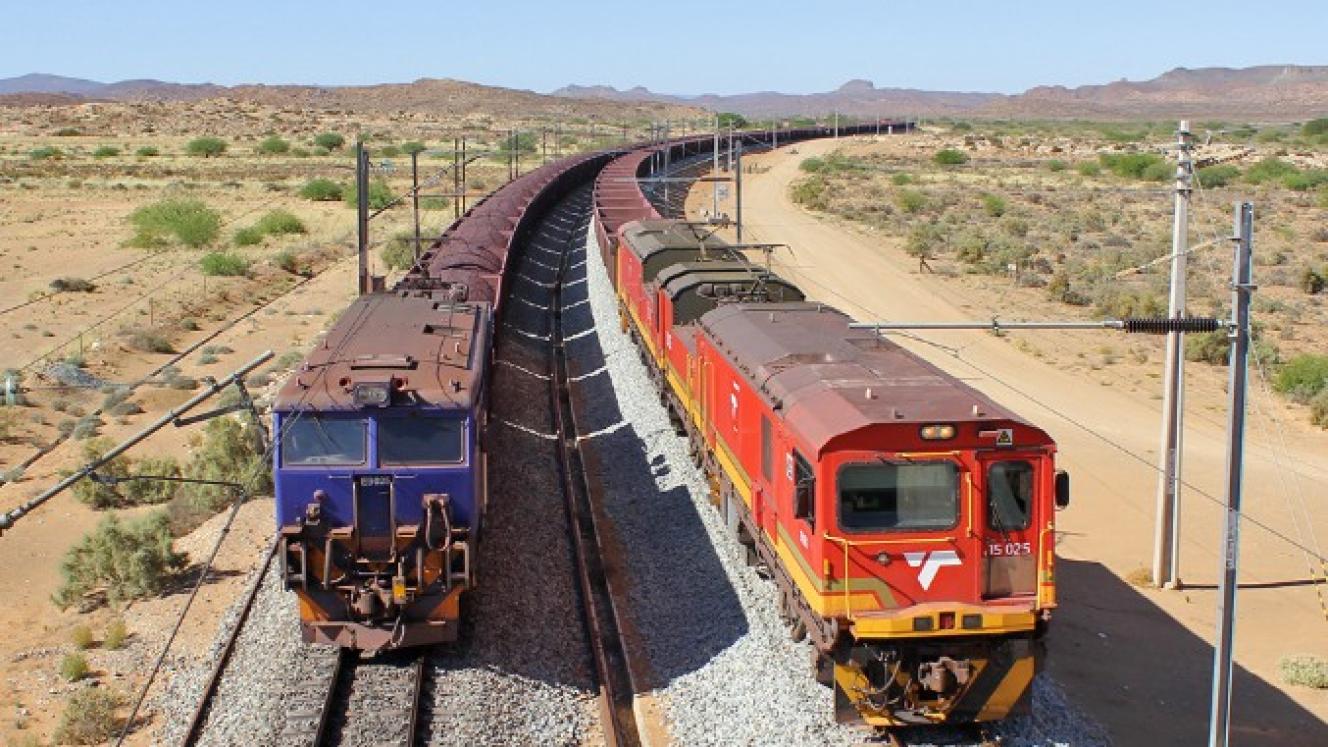
Private-sector participants (PSPs) will have to achieve about 65 million tonnes of cargo moved via South Africa’s rail freight network to help Transnet reach its gross per-annum ambitions of 250 million tonnes.
To make this “railway renaissance” a reality, says rail logistics management executive, Anand Moodliar, “train operating companies need to bring procurement events that should be in excess of R30 billion worth of investment”.
Speaking during a Transport Forum presentation, in partnership with the African Rail Industry Association and the Localisation Support Fund, looking at the country’s rail freight sector, the CEO of the Barbery Group said as much as R40bn in investment might be required to realise rail freight targets.
Linking up with the presentation’s theme of ‘The Power of Local’, he said the current open-slot project, whereby Transnet Freight Rail was allowing PSPs access to its network, would only work if symbiotic relationships were prioritised.
Paraphrasing Transnet Group CEO Michelle Phillips, Moodliar said the concept of competition versus the concept of cooperation would be fundamental to the foundation already laid for public-private partnerships around rail freight growth.
He said it had been established that rail logistics on its own was too expensive for the country’s GDP capacity, emphasising though, that “a better modal split” with road freight was not only possible but necessary.
Although the context against which the country’s rail freight sector is required to recover is historically weighted against Transnet, the parastatal has recorded improvements under Phillips.
Compared with the work done by Transnet to lay down tracks for tonnage growth, the private sector needed to step up, said Moodliar.
Referring to the rail network statement by Transnet Rail Infrastructure Manager, the division created to oversee procurement around the open-access project, he said it had been made “very clear that any train-operating company applying for slots on the rail network has to demonstrate that the slots it's applying for amount to additional value.”
Displacing any existing product that was already on the rail network would be counterproductive to increasing tonnage targets, Moodliar said.
Getting the balance right in adding 65 million tonnes to existing tonnage through PSPs, is why Moodliar has reservations about the private sector.
“We have not adequately played a good space. If you look at the different projects on the African continent at the moment, South African companies have not necessarily participated adequately.”
He said it was hoped that the African Rail Industry Association could play an enabling role in this regard, to drive home the idea that the “power of local” was what PSPs brought to the table.
Although the current open-access process had added a dynamic dimension to the road-to-rail narrative, the challenge from the road freight sector remained ever present, said Moodliar.
Performance-based standards (PBS) in trucking, with payloads up to 50 tonnes, thanks to three axles at the back, means road freight is busy with its own progress journey. Consider that approvals are under way for a fourth axle in PBS, taking payloads to 60 tonnes, and it’s game on between road and rail,” said Moodliar.
“That means that rail has to be even more competitive to be able to see a modal shift, which brings savings to exporters, and then makes them drive jobs by creating more mining activity and other related manufacturing activity.”
Following the recent Mining Indaba in Cape Town, attended by 12 000 people, Moodliar said that for every million tonnes of new volume on the rail network, about a R100m a year in access fees could go towards creating a better, more robust, stable and improved network.
“If we can fast-track more volume, we can immediately bring the cash we need to unlock more network stability and investment into the infrastructure.
“Rail freight in South Africa has reached a quo vadis moment,” he stressed.