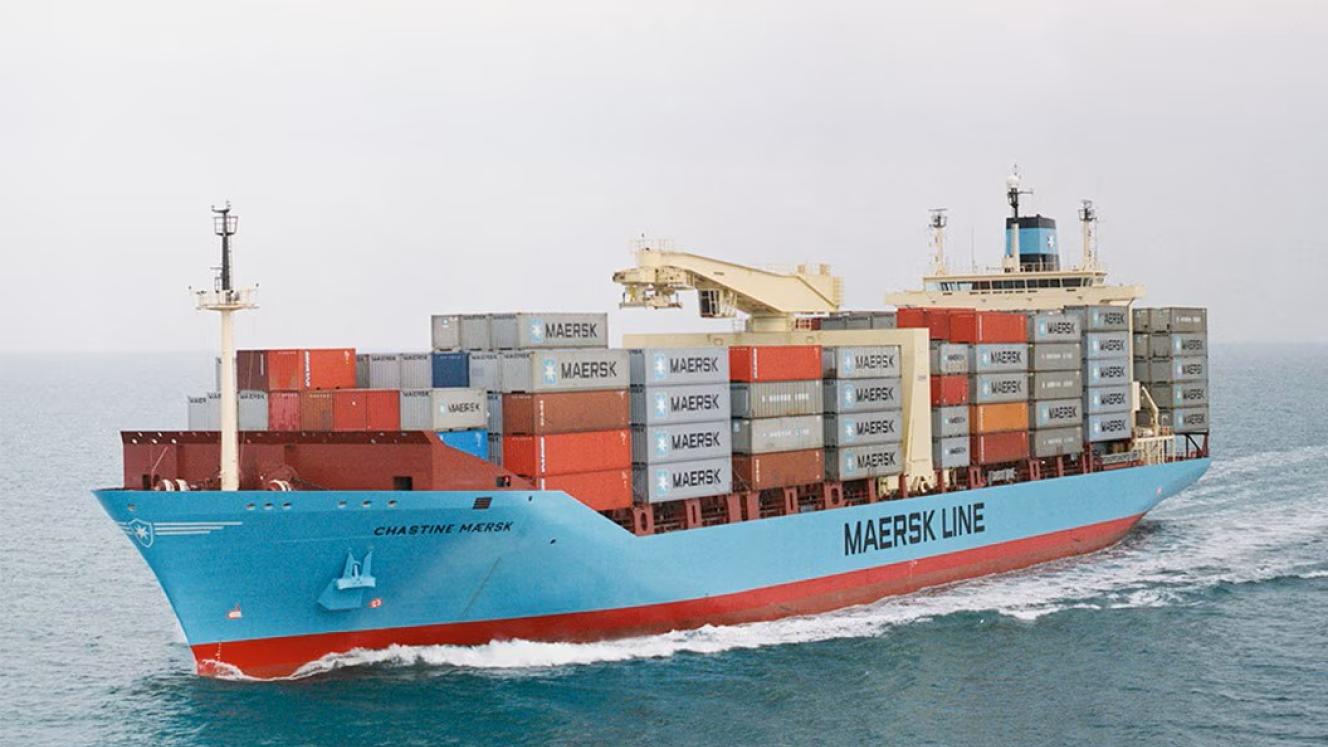
The arrival of the NP Glory 4 – a landing crafttype vessel to be used for the construction of the first airport on St Helena Island – made history when she berthed at a specially constructed temporary berth at the island this week. She was the first vessel to voluntarily and deliberately touch ground on the island, which has until now been served by barge and launch discharge and loading only. The vessel sailed from Walvis Bay on her first voyage carrying the first load of heavy earth-moving machinery for the island. “During the four-year construction period she will run between the island and Walvis Bay – carrying everything required for construction to the island, including provisions, fuel and equipment,” said logistics manager for construction major Basil Read, Lars Greiner. Basil Read is the appointed contractor for St Helena Island Airport, which is a R2.7-billion design, build, operate and transfer project, funded by the Department for International Development (DFID), a department of the British government. The design phase started in November last year, and construction is estimated to take place over a 48-month period. The scope of work includes a 1 850-metre concrete runway with taxiway and apron to cater for aircraft up to the size of an Airbus A320 and Boeing 737-800. After construction, the operations phase of the airport contract will be done in partnership with Lanseria Airport for a period of 10 years – and have an estimated contract value of R450 million. The construction project is a complex job, according to Greiner. “Our initial job has been to build a temporary wharf – which is now complete – as well as an access road, a works road up the side of a mountain, and a 14-kilometre road to the site,” he told FTW. “We will then build a temporary and then permanent bulk fuel installation for the island, holding 6 m litres of diesel and aviation fuel. Further, there is an 8-m cubic metre landfill embankment through which a 750-m long reinforced concrete culvert will run. “All this must be done before the actual 1 850-m runway and the airport terminal building of 3 500 sqm – housing support infrastructure, air traffic control and safety – can be built.” Located approximately 1 900km from Africa, the island of St Helena – measuring 16km by 8km – is one of the world’s most remote locations. Home to a population of just over 4 000, the island’s only lifeline to the outside world has been the RMS St Helena, the only regular ship to call at St Helena. This makes the transport logistics purely a sea-going job, according to Greiner.
Project to build St Helena airport gets under way
Comments | 0
© Now Media. This content is protected by copyright and may not be adapted or republished. If you would like to discuss cooperation opportunities, please contact: editor@freightnews.co.za.