The Council for Scientific and
Industrial Research (CSIR)
is in the process of finalising
an evaluation report on its
Performance Based Standards
(PBS) pilot project.
According to Dr Paul
Nordengen, the project, a
subset of the Road Traffic
Management System, has been
extremely successful. It has
resulted in a 70% reduction
in crash rates and a weighted
average 28.5% reduction
in heavy vehicle trips to
transport the same freight – in
addition to a 20% reduction
in fuel consumption and a
significantly increased payload
efficiency.
“In June we will reach 100
million km on this pilot project
which was first launched
in 2007 under the banner
of Smart Trucks,” he said
at the annual Road Freight
Association (RFA) conference.
“By the end of this year, through
this pilot project 365 000 trips,
42.3 million km, 11 million
litres of fuel and 29 000 tons of
CO2 will have been saved.”
With more than 168 vehicles
on the pilot (South Africa has
more than 230 official smart
trucks), he said they were now
in the process of drawing up the
evaluation report to present to
the Department of Transport
for decision making on how to
proceed into the future.
With not all provinces on
board with the programme,
Nordengen said it was
imperative to increase
provincial participation while
research continued.
“We are also developing
a smart truck portal
administration system for
monitoring and evaluation,”
he said.
It remains uncertain what
government will do with
the findings of this highly
successful research pilot
programme, but it is hopeful
that legislation will be updated
to accommodate the longer and
heavier vehicles that operate on
the programme.
“The national department
of transport
is actively
engaged
with the
project,” said
Nordengen.
“We are in
the process
of preparing
the report
which will be
presented to
government
and then we
will be able to
decide on the way forward.”
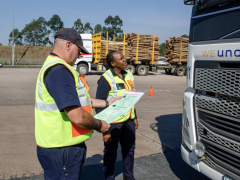
He said at present RTMS
certification was a prerequisite
to be on the PBS programme,
something not all operators
were happy about but it was
essential to have a minimum
standard in place and RTMS
assured that. The RTMS is
a voluntary self-regulation
scheme that tries to encourage
consignees, consignors and
road transport operators to
implement a management
system to contribute to
preserving road infrastructure,
improving road safety and
increasing productivity
He said while PBS was not a
silver bullet it had made some
significant findings.
“We have seen fewer vehicle
breakdowns, fewer driver error
crashes and improved driver
behaviour, while speeding
incidents have gone down from
299 per year per truck to 18.
There’s an estimated annual
saving of R115 million per year
thanks to the reduced crash
rate alone.”
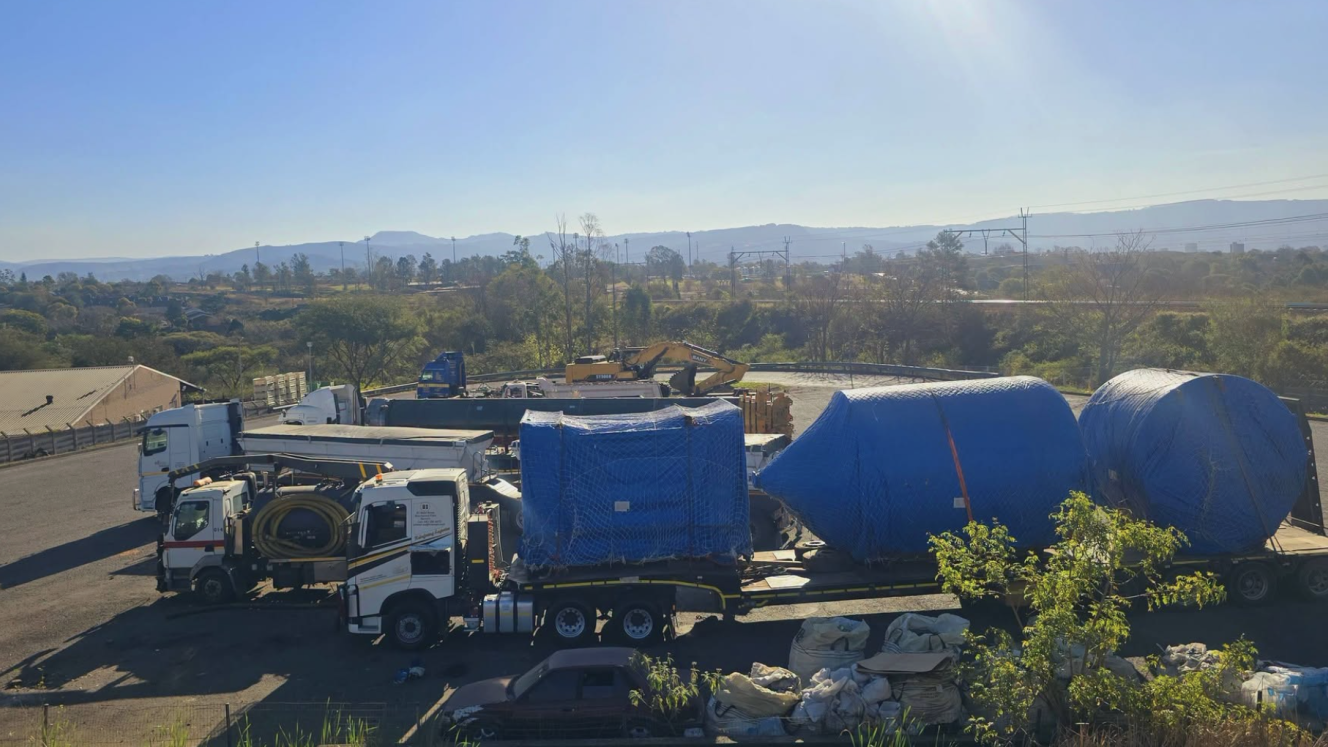
The project,
which started
with only
two vehicles
in 2007, has
continued to
gain traction,
showcasing
what can
be achieved
with a
performancebased
approach
– even when
using heavier and longer
vehicles.
“Most countries control
heavy vehicle use on the road
network through prescriptive
regulations, which do not
seem effective in many cases,
particularly in developing
countries. PBS uses a different
approach, specifying the
performance required from the
operation of a vehicle on a road
network, thus what a vehicle
can do,” explains Nordengen.
There’s an estimated
annual saving of
R115 million per year
thanks to the reduced
crash rate alone.
– Dr Paul Nordengen