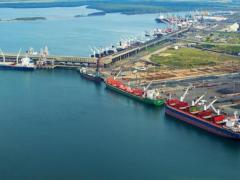
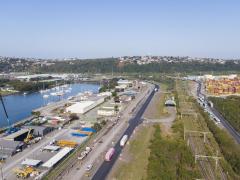
Early Ngqura port adopters MOL and MSC are experiencing such a growth in volumes through the port that Transnet Port Terminals will have difficulty accommodating additional lines until the berths have been extended, according to acting Transnet Port Terminals (TPT) CEO Karl Socikwa. Speaking at an event at Ngqura hosted by TPT to celebrate the first year of operation of the port, Socikwa said the port would have moved 409 000 TEUs in its second year, after handling 288 000 in the first full financial year of operations. This means Ngqura will have reached half the 800 000 TEU capacity of the first phase of the container terminal in the first full financial year of operation. Capacity has been increased by adding a sixth “gang” to operate the six gantries, ensuring that three cranes will be able to work on a vessel at a time round the clock. Productivity is also rising, with the port averaging 25 moves an hour (target 28), and 39 per ship working hour (SWH), which is expected to increase to 60 SWH with the additional staff on board. Dredging will start soon to dig the first 100 metres of the third and fourth berths down to 15.5 metres in order to accommodate two 305-metre vessels. At present, the port can only handle a 305 metre and 275 metre vessel at the same time. Nosipho Damasane, TPT chief operating officer, said other shipping lines had started showing interest now that the port had proven itself. However, the existing users have plans that will absorb most of the additional capacity when the extension starts operating in the middle of next year. “MSC is talking about an 8 000 TEU vessel for the first time in South Africa,” said Damasane. Arthur Waters, head of MSC in the Eastern Cape, confirmed that the line was planning to increase volumes through the port of Ngqura. MOL’s John Lawlor says the company is planning to bring in bigger vessels and grow its volumes as well. At present, MSC is responsible for the bulk of the traffic, having put 200 000 containers through the port in the first year, according to Waters. “We will very quickly be talking about a four berth operation,” predicted Socikwa. The quay wall for the additional two berths has been completed, and a large area paved. The harbour next to the wall now needs to be dredged and top structure added to make the additional quays operational. The additional investment will increase the port capacity from 800 000 TEUs a year to two million a year. While not wanting to be committed to dates for the next phase, Damasane said it was probable that the whole berth would be dredged at the same time as the first 100 metres. “We will look at the numbers to see when the berths should be operational, and I think it will be far earlier than
One year on and Ngqura is pumping
Comments | 0
© Now Media. This content is protected by copyright and may not be adapted or republished. If you would like to discuss cooperation opportunities, please contact: editor@freightnews.co.za.