In what has been billed as
a major achievement, the
largest consignment of horses
yet from South Africa to
Europe and the Middle East
left Cape Town last week.
South African horse
exports came to a near
standstill in 2011 after an
outbreak of African horse
sickness in its control zone
in the Western Cape near
Kenilworth where all exports
are handled.
Since 2011 all horse
exports have been routed via
Mauritius where animals
are quarantined and kept
for 90 days before moving
to their final destinations.
Whilst South Africa can
move animals directly to
the United States, it is more
cost effective to do so via
Mauritius even though it
takes at least a month longer.
A total of 58 horses left
Cape Town on Monday
for Mauritius – the largest
consignment to date for
Europe and the Middle East.
Of these 48 are destined for
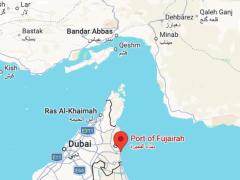
Dubai in the United Arab
Emirates, three are bound
for Bahrain, five for the USA,
one for the United Kingdom
and one for France.
Alan Winde, minister of
economic opportunities, said
the export of the horses was a
major boost for the province’s
horse export industry while
also a testimony to the high
quality of South Africa’s
animals.
“The horse export industry
is worth over R200 million
to our economy,” said Winde.
There is potential to grow
it to R1 billion if we put the
right measures in place,” he
said.
But this would require
South Africa to pass
international safety
regulations to allow it to
export directly to markets in
Europe and the Middle East.
At the very least the African
horse sickness control area
has to remain free of African
horse sickness until May
next year. Various task teams
have been appointed and
are working hard towards
ensuring South Africa can
again export directly to the
world.
Kerry Hobday of Hobday
Equestrian Enterprises,
the agency that handled
the export logistics of the
58 horses, told FTW a
limited number of horses
could currently be exported
annually.
“Due to the time frames
required
one can
feasibly only
export three
consignments
a year. The
Mauritius
facilities are
limited in the
amount of
animals they
can quarantine
and hold,”
she said.
“Currently if one looks at
the cost and time involved
in the export of horses it is
very prohibitive. Due to this
the industry has not grown
as much as it could have, but
trade has continued which is
an indication of the quality
of animals South Africa has.”
She said often the logistics
and shipping costs were
more than that of the actual
animal yet buyers still
preferred to purchase here.
The high shipping costs
are largely due to the lack of
scheduled freighters for the
transport of horses and so
planes have to be chartered.
Hobday said the horse
export industry was one
of huge
potential
if South
Africa could
address the
challenges.
According
to Winde it
would mean
establishing
a local
lock-down
zone that
was disease
free and that could serve
as a quarantine, transit
and export station. It
would have to be approved
internationally.
Growing horse exports is a
key priority for Winde who in
April this year, during a trade
visit to the Middle East,
undertook to grow the horse
trade of the province with the
United Arab Emirates.
INSERT & CAPTION
The horse export
industry is worth over
R200 million to our
economy.
– Alan Winde
CAPTION
One of 58 horses that left Cape Town for Mauritius last Monday.
No horsing around
Comments | 0
© Now Media. This content is protected by copyright and may not be adapted or republished. If you would like to discuss cooperation opportunities, please contact: editor@freightnews.co.za.