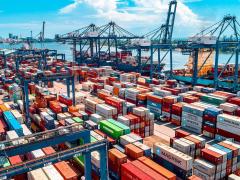
Ngqura is underrated by many inland shippers as an export gateway, says Mignon Fishburn, BDM Automotive at Kintetsu World Express. The port is under-utilised – according to Transnet National Ports Authority (TNPA) statistics the port handled 774 899 containers between January and December 2018 out of a design capacity of 1.3 million TEUs. Of the exports 121 815 were empty. For incoming cargo 378 337 TEUs were shipped, and 396 562 landed. Shippers move to Ngqura when they find that they can save time and enjoy faster service when they switch to Ngqura to load on the same vessel they would normally have used in Durban, she says. The practicalities of the Saecs and Safari port rotation schedules mean that a Gauteng shipper may be able to load 10 days later in Ngqura than in Durban – for the same vessel. Forwarders are also permitted to collect priority containers while the vessel is still working – a saving often of days. The port authorities are willing to work with forwarders and large clients. One shipper has, for example, been offered a dedicated stack inside the Ngqura container terminal. Ngqura is becoming better connected to the rest of the world, with direct calls to Singapore and India having been introduced recently. Fishburn calls up a table on her laptop to show that this will be a growing trend as vessels become too big for the current Durban configuration. Ngqura is the only deep sea port in South Africa capable of handling full fifth-generation New Panamax-sized vessels, which have a 15.5m draught. Land-side connectivity to Ngqura is also better than many realise, adds Fishburn. “What most people do not know is that Transnet Freight Rail (TFR) has essentially equalised rates. Ngqura is only R200 more expensive from City Deep than Durban for a 20-foot container – and you escape the Durban bottleneck. “In addition, there are 4 000 hauliers registered on the Ngqura Navis system. There is plenty of capacity for back loads into the port,” she says. Some hauliers are transporting cargo from Ngqura as far as Namibia and Mozambique – which means there is capacity from neighbouring countries as well. Fishburn is also encouraging shippers to take advantage of the duty-free status of the Coega SEZ. Unlike bond storage, cargo can be stored duty-free in the special economic zone (SEZ) indefinitely.
Ngqura ‘underrated’ as export harbour
Comments | 0
© Now Media. This content is protected by copyright and may not be adapted or republished. If you would like to discuss cooperation opportunities, please contact: editor@freightnews.co.za.