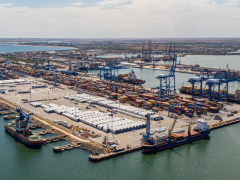
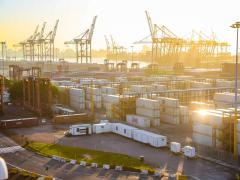
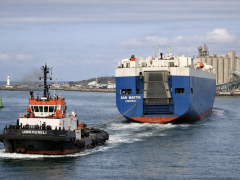
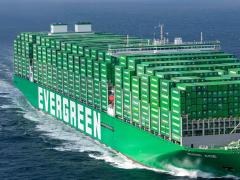
On April 4 the Port of Ngqura celebrated a full sixth months in operation – and with 90 vessels handled, both volumes and productivity have far outstripped expectation, TPT chief operating officer Nosipho Damasane told FTW last week. The initial target was one vessel a day – the reality has been double that, with a quantum leap in the number of TEUs handled from 2 900 at the start to 19 500 in February this year. MSC and Mitsui OSK Line are the main callers at present, having transferred from Port Elizabeth to Ngqura. But Damasane is adamant that there is no cannibalisation – rather port complementarity in action. “We see PE primarily as an auto port with container handling capability. “We have decided to cap it at 300 000 – 400 000 TEUs. Vessels that can’t be handled at PE will naturally migrate to Ngqura. “Five years ago we decided to find room for transhipments in Cape Town, PE and Durban in advance of Coega,” she explained. “We kept extra capacity in Cape Town for Luanda cargo, knowing that we would transfer that to Ngqura.” In effect, business was created in advance of the port’s launch – and it’s already bearing fruit. Of the 19 500 TEUs handled in February, 70% were transhipments to southern Africa, including South Africa, Angola and the SADC. During its first six months, Ngqura projected that it would handle 50 000 containers. The actual figure will be 53 300. For its first year of operation 100 000 were predicted – in reality this figure is likely to be 286 000 and by 2014/15 the budgeted figure is 414 726 with the actual figure likely to be 418 800 TEUs. At the start people were sceptical, said Damasane. “The first three months were a trial period during which they were testing the waters. “The quantum leap has come in the past three months.” This is evident also in the numbers of trucks entering the port – from 1900 in October 2009 to 3284 in February 2010. And in terms of turnaround time, the figure is currently around 36.2 minutes against a target of 35. Productivity, she says, has and will continue to be high on the agenda. “In the recruitment of staff, we upped our game in terms of entry level of port workers and looked at unemployed graduates and trained them. “When volumes increased in January and February, there was a dip in productivity which was immediately addressed. “In March and April we are recruiting further staff to increase the number of gangs available. “The biggest challenge now is to fast-track equipment so that we can get in people, train them and improve productivity.” Rail too is an important part of the mix. “We need to enhance our rail system to ensure that the route to the hinterland is in place.” By the end of February, 146 trains had already been handled. The statistics provided by port management paint a very positive picture. A whistle-stop tour of the port revealed a world class facility driven by passionate staff, determined to make it work – all it needs now is more shipping lines to recognise its potential.
Ngqura performance outstrips expectation
Comments | 0
© Now Media. This content is protected by copyright and may not be adapted or republished. If you would like to discuss cooperation opportunities, please contact: editor@freightnews.co.za.