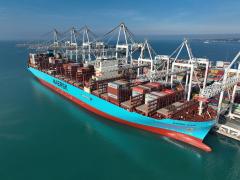
As the IMO 202 fuel sulphur regulation - which takes effect on January 1 - looms large for shipping lines, the industry needs to be looking at what to do next to reduce greenhouse gas emissions, says president and CEO of the World Shipping Council, Jonathan Butler.
Speaking at a recent conference in Hamburg, he said the IMO had adopted a very ambitious goal of cutting greenhouse gas emissions from shipping by half by 2050 – and taking those emissions to zero by the end of the century.
“To meet those objectives we need to find new fuels – and since R&D is essential to meet those objectives, the IMO is proposing to set up an international R&D development centre to be known as the International Maritime Research Board or IMRB,” he says.
It would be funded by mandatory industry contributions based on fuel use, which is something that the IMO already tracks.
“The money collected would be used to fund research that could be carried out by a wide range of entities around the globe, ranging from research institutions to national laboratories to independent institutions and companies. In addition to some basic science, the emphasis would be on evaluating which technologies have the greatest potential to be commercially feasible for powering long ocean voyages, and then doing the engineering work to get those fuels and technologies to the point where they can be commercially viable.”
He believes it is not feasible for any one company or any one country to provide the resources and focus that are necessary to get the R&D done on a scale and on a schedule that would allow the industry to meet the IMOs greenhouse gas emissions reductions for 2050 and beyond – hence the establishment of the new body.