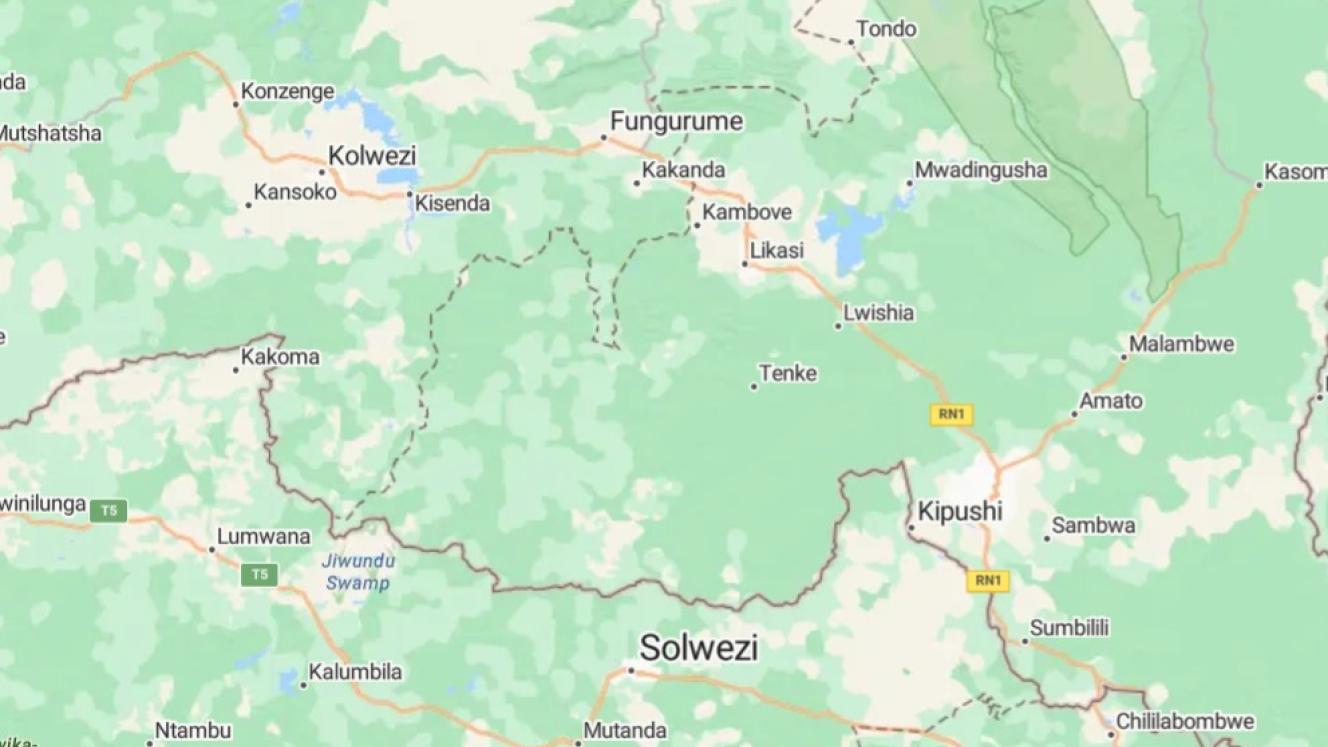
The dominance of copper in the Democratic Republic of the Congo (DRC) and Zambia is both a risk and an opportunity.
An April 2025 World Bank report prepared by a team headed by Bekele Debele points out that the risk is that mining, especially copper extraction, is vulnerable to shocks.
This is backed by the Institute for Economics and Politics, University of National and World Economy, which states that Zambia's heavy reliance on mining perpetuates vulnerability to commodity price fluctuations.
Another concern from a societal perspective is that mining employs only a fraction (less than 2%) of the labour force, according to Debele.
Although Zambian unemployment is relatively low, the focus is on job creation, particularly in the rural areas, where agriculture employs about 60% of Zambia's workforce and contributes 19% to GDP.
According to the ZamStats, the country has a labour force of around 4.5 million out of a total population of over 11 million.
The latest available statistics put unemployment at 12%, with youth unemployment decreasing around 26.4%.
However, it is a major contributor to government revenue.
Zambia Revenue Authority commissioner general Dingani Banda told stakeholders that mining revenues had increased by 64.9% between 2024 and 2025.
Copper exports in 2025 are estimated to have been worth around $12.5 billion.
The mining sector is itself diversifying, thereby reducing the risk of economic shocks.
“There has been notable growth in production of cobalt, nickel, gold and other minerals that are critical for the global energy transition,” according to the PwC Zambia 2025 Mining Industry Report.
“This diversification, together with increased local participation in mining rights and a stronger focus on sustainability, is helping to position Zambia’s mining industry for a more resilient and inclusive future,” it adds.
Then there are attempts to reindustrialise the region.
Both Zambia and the DRC are forcing commodity traders to add value at source, rather than perpetuating the colonial legacy of exporting raw materials.
According to the UN Convention on Trade and Development (Unctad), a tonne of copper ore leaves Zambia worth a few thousand dollars; that same copper turned into electrical wire is worth twice as much, and shaped into a transformer, 10 times as much.
Unctad points out that Zambia exports most of its copper in raw form (cathodes or blister), with less than 5% used domestically for fabrication.
As a result, the country often misses out on the ‘middle’ steps of the supply chain – engineering, manufacturing and logistics – which create jobs and higher profits.
Opportunities are also being created for localisation of support to the mining sector through Zambian local procurement regulations, which came into effect on January 1.
Every mining and mining-related company must allocate at least 20% of its annual procurement budget to local companies providing core mining goods or services within six months of commencement, specifically by June 30.
This procurement quota will then rise to 25% within one year, 35% within two years, and ultimately to a minimum of 40% within five years of the commencement date.
The region is also trying to plug into the electric vehicle (EV) boom.
In 2025, the DRC and Zambia launched a transboundary battery and EV special economic zone along their shared mining belt, supported by African Export-Import Bank (Afreximbank) and the United Nations Economic Commission for Africa.
The market is the start-ups across Africa that are assembling electric buses, tricycles and service vehicles.
Such efforts align with the African Mining Vision (2009) and African Commodities Strategy (2019), which call for transparent, equitable and optimal resource use to drive sustainable development, according to the World Bank.
Then, of course, the people living in the Copperbelt want to be fed, clothed and entertained, creating opportunities in agriculture, manufacturing, tourism and regional trade.