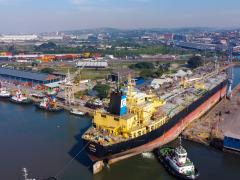
The eThekwini Transport Authority has tabled its updated Integrated Freight and Logistics Strategy 2026 before council, prioritising dedicated truck staging facilities, a formal freight route hierarchy and new freight policies aimed at easing congestion around the Port of Durban and key transport corridors.
The strategy sets out a framework to improve freight movement while reducing the impact of heavy vehicle traffic on surrounding residential and industrial areas.
The municipality’s four priority projects are:
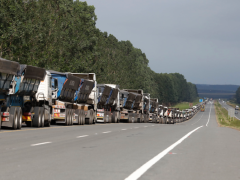
- Development of dedicated truck staging facilities to prevent heavy vehicles from queuing on public roads
- Formalising criteria to evaluate the proposed Cato Ridge Intermodal Hub as a key inland freight node
- Developing a clear freight route hierarchy across the eThekwini municipal area
- Introducing a dedicated freight route policy and accompanying municipal bylaws
According to the council report, the strategy seeks to improve freight transport efficiency and safety, support trade growth, reduce infrastructure deterioration and strengthen collaboration with strategic partners, including Transnet.
“Overall, the reviewed strategy recognises that one of eThekwini Municipality’s key challenges is maintaining efficient mobility and accessibility for businesses and the Port of Durban while managing increasing demands placed on the city’s transport infrastructure,” the municipality said in the report.
The strategy also aligns freight planning with broader spatial and environmental planning, including the Port of Durban strategic environmental assessment (SEA).
Speaking during council deliberations last week, Ward 66 Councillor Zoë Solomon said the strategy is critical for communities in the Bluff, Umbilo, Clairwood and the Jacobs industrial precinct.
“While the SEA is a Transnet-led process and not a municipal one, both are connected. The SEA examines the future expansion of the port and its impacts on surrounding communities while the strategy focuses on how freight moves through our city,” Solomon said.
Thousands of heavy trucks use Solomon Mahlangu Drive every day – the Bluff’s primary access route – leaving residents vulnerable to severe traffic disruptions whenever a truck breaks down or a collision occurs, she added.
“The Bluff has carried the burden of port-related freight for decades. We support a thriving port because it is vital to our economy but economic growth should never come at the expense of the safety, health and quality of life of the communities that live alongside it,” Solomon said.