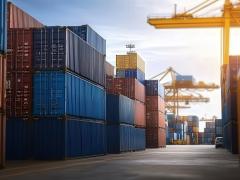
A new form of realism is evident in the Namibian business and parastatal fraternities. For the first time in more than five years of visiting the country for the FTW feature, this writer found people voicing concerns – “what happens to the corridors when Luanda becomes a functional port again, and when Beira, Nacala or Dar es Salaam become viable export and import hubs?” The risks have become real as the roller-coaster growth of traffic along the Kunene corridor to Angola has come to an end, with freight volumes a fraction of what they once were. Many reasons are given – new legislation in Angola which limits the amount of cash that can be taken out, the strength of the rand, and civil unrest. Of more concern, however, is the shift of volumes due to improving efficiencies and infrastructure within Angola itself. A working port of Luanda was always seen as a distant possibility, but it rarely featured in short- to medium-term planning. And, if Luanda can revive itself, what about the ports along the East Coast? They have a geographic advantage. Most of this region’s trade is now with the East. The first step to solving a problem is recognising it. In Walvis Bay, for example, there is consensus that the port must position itself as a ship and rig repair centre of choice. The skills are there. Many of the top marine engineering companies have opened offices in the town, and both the floating dry dock and synchro lift facilities are booked up months in advance. At present work is being lost to South African ports because Walvis Bay does not have the equipment needed and, some say, greed on the part of certain operators who priced the port out of the market. In order to bring the business back – and to keep it – Namport is in negotiations to build a specialised quay capable of handling four oil rigs at a time, plus a medium water trawler. The corridor group is also in the throes of reinventing itself – transforming into a development agency promoting investment along the transport corridors. There are sceptics – but then people also told FTW that the corridors would not work, and that plans for the development of the port of Walvis Bay were fatally flawed. Greater marketing efforts are also being put into promoting Walvis Bay and the corridors to the markets for which it has a geographic advantage – Europe and the Americas. The Chinese are showing the world that there is money to be made in Africa, and they are not likely to be without competition for too much longer. Also seeping into the consciousness is the realisation that, after 21 years of independence, it is time for Namibia to behave like an adult, and not to be so dependent on South Africa. From that comes plans for the country’s first chicken farming operation, and traders looking at ways of sourcing products directly, instead of through South Africa. A large percentage of the fast moving consumer goods, clothing, appliances, and the like that are sourced in South Africa for both Namibia and its neighbours are made elsewhere. By bringing the goods directly into Walvis Bay, the logistics chain is shortened and the costs of one of the middle men are saved. This can only be good for the region – reducing costs for consumers and over-reliance on South Africa. The bottom line is that it is the only way to create much-needed jobs. Namibia’s unemployment is estimated at over 50%. Like other rulers in the region, Namibian politicians have been given a wake-up call by the uprisings to the north. They see the same ingredients for popular uprising in their own countries – and in South Africa, to which they are joined by an economic umbilical cord. With a combination of political will and the savvy of the Namibian business community, the country may well be laying the foundations for sustainable economic growth.
Namibia faces up to economic risks
Comments | 0
© Now Media. This content is protected by copyright and may not be adapted or republished. If you would like to discuss cooperation opportunities, please contact: editor@freightnews.co.za.