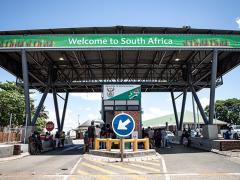
Commercial traffic has suffered fewer delays over the past months at the main South African borders thanks to the digitisation of the clearing system. Agents at Beitbridge say the modernisation of the customs clearing system helped truckers escape the December congestion, which saw queues of cars and bakkies of up to 23 kilometres long on the Zimbabwe side of the border, as well as long delays on the South African side. Trucks were caught in this congestion due to the lack of infrastructure to handle such volumes, but were not “unduly delayed,” according to agents based at the border. Similar hold-ups were experienced at the Lebombo border post with Mozambique, according to Danie Parsons, chairman of the local agents’ association. “The systems worked very well, but the border posts came to a standstill. Trucks could not physically get through,” he says. With some trucks carrying fuel and other hazardous cargo, this represented a threat to “hundreds” of commuters as the police and emergency services could also not get through the traffic at times. At one stage travellers faced queues of up to 14km. “In the past the traffic was better controlled. There were a lot more traffic officers on the road. The officials have to realise that the traffic increases year by year,” he told FTW. Traffic flowed a little faster on the Zimbabwe/South Africa border. One of the Beitbridge agents interviewed by FTW said “in my six years on the border, 2012 was the best as far as commercial is concerned”. South Africa’s Border Control Co-ordinating Committee (BCOCC) deployed more staff after four days of long delays. Zimbabwean and South African officials then abandoned their blame game and got down to business. South Africa’s deputy director of the Beitbridge border post, Elvis Mavhunga, is quoted as saying that between 26 000 and 30 000 travellers passed through the border on some days of the holiday period, compared to about 15 000 a day the previous year. This would have been matched on the Zimbabwean side of the border. A makeshift clearing post in the commercial vehicle clearing area had the biggest impact on hauliers, as parking space was taken up by travellers on foot and in vehicles. Customs officials also had their work cut out with smugglers trying to take advantage of the sheer volumes of people trying to get through the border. Two of the most interesting finds were a consignment of false Zimbabwean passports hidden in a tyre, and a large quantity of Viagra. There seemed to be fewer attempts to smuggle tobacco and tobacco products. Parsons called for the establishment of dedicated truck and emergency vehicle lanes, or for the creation of “commercial freight windows” from midnight to three in the morning. Officials could also be stationed at the major turnoffs to redirect traffic through Swaziland to reduce the pressure on Lebombo. “They did this on the way back and it worked much better,” he said. What would also reduce the pressure would be the staggering of mine closures because it was the rush of returning miners that added to the pressure. INSERT ‘Customs officials had their work cut out with smugglers trying to take advantage of the sheer volumes of people trying to get through the border.’ CAPTION Long queues at Beitbridge provide plenty of business opportunities for enterprising hawkers.
Modernisation helps truckers avoid border congestion
Comments | 0
© Now Media. This content is protected by copyright and may not be adapted or republished. If you would like to discuss cooperation opportunities, please contact: editor@freightnews.co.za.