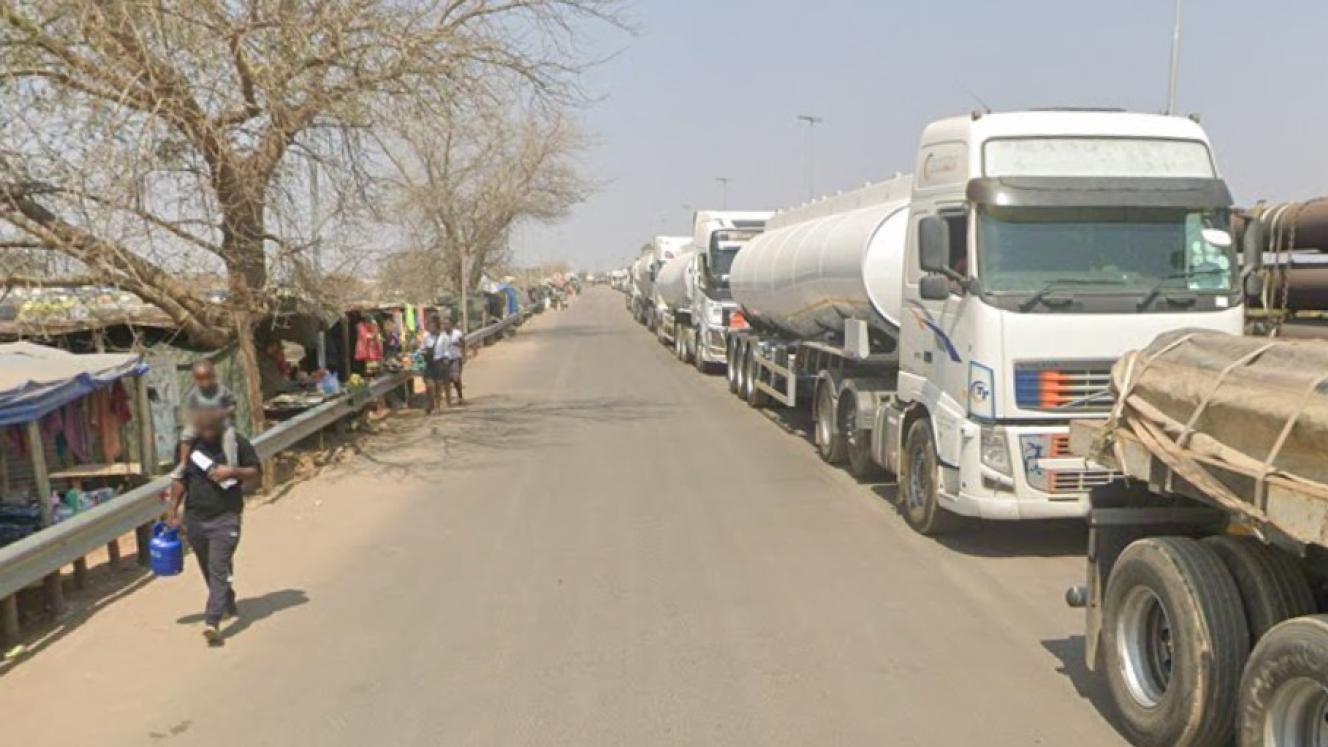
The Walvis Bay Corridor Group (WBCG) says accelerating the rollout of one-stop border posts (OSBPs) remains central to its strategy as it steps up B2B engagements to cement Walvis Bay’s position as a preferred regional trade gateway. “We are working towards one-stop border posts across all the Walvis Bay corridors,” said Mbahupu Hippy Tjivikua, chief executive officer of the WBCG. “The Trans-Kalahari/ Mamuno OSBP pilot has been under way since September 2024, while both the Namibian and Zambian governments have reaffirmed their commitment to fast-tracking the establishment of the Katima Mulilo OSBP. Progress at this border post has been encouraging, and once operational, it is expected to reduce border dwell times substantially.” He said the WBCG also remained at the forefront of driving the legislative and infrastructural reforms needed to support seamless trade facilitation across the region, lobbying for policy improvements and promoting corridor development. “We are seeing notable advancements in this regard,” said Tjivikua, pointing to the rehabilitation of the Karibib– Usakos Road, an essential artery connecting three of the four Walvis Bay corridors. “We also have renewed government commitment to the Trans-Kalahari Railway, whose feasibility study is expected to be completed by April 2026. In addition, we are engaging developers of a transformative new route linking Kolwezi (DRC) to Walvis Bay via Solwezi, Mongu and Katima Mulilo. This route bypasses the congested Copperbelt and the Kasumbalesa border post, offering a shorter, more efficient alternative to the current WBNLDC alignment. Developers have already secured a concession and are preparing to construct new roads and a border post between the DRC and Zambia.” WBCG’s operational focus spanned all four Walvis Bay Corridors – the Trans- Kalahari, Walvis Bay–Ndola– Lubumbashi Development Corridor, Trans-Cunene and Trans- Oranje Corridors – each playing a crucial role in positioning Namibia as the preferred trade route and logistics hub for the SADC region, he said. From handling zero transit cargo in 2000, these four corridors now facilitate just under 2.5 million metric tonnes, demonstrating significant and sustained growth. According to Tjivikua, this expansion is driven by increased mining and commodity exports, including copper, coal and manganese, rising fuel movements and growing agricultural exports. Continued improvements in port capacity, faster transit times via Walvis Bay, and enhanced safety and security measures across the corridors further reinforce this upward trajectory. “There are still major challenges affecting corridor development across Africa, including persistent non-tariff barriers (NTBs), fragmented and non-harmonised customs and regulatory systems, as well as limited cross-border coordination – all of which continue to hinder the implementation of regional protocols,” said Tjivikua. “These issues are evident in long border delays at high-traffic crossings such as Kasumbalesa, where fragmented processes slow cargo movement significantly. Infrastructure financing gaps also remain a major constraint, particularly for large-scale rail, port and multimodal investments, while inadequate infrastructure maintenance further limits efficiency.” He said digitalisation across countries remained uneven, affecting data sharing and real- time visibility, as seen in the slow rollout of single window systems in several SADC and Comesa member states. “Skills and capacity shortages in specialised logistics functions, security risks on key transport routes, and the underutilisation of continental frameworks such as the African Continental Free Trade Area (AfCFTA) continue to constrain the continent’s overall competitiveness.” Despite these challenges, Tjivikua said improvements were being made. “At the Port of Walvis Bay, major enhancements have been completed, including capital and maintenance dredging, widening the South Port entrance channel from 134 metres to 200 metres, and increasing depth to accommodate vessels with draughts of up to 15.5 metres. Additionally, strategic borders such as Oshikango–Santa Clara on the Trans-Cunene Corridor now operate 24-hour services to further improve trade fluidity.” He said road infrastructure upgrades were continuing across key corridors, including the recently launched Keetmanshoop Weighbridge to support cargo movement on the Trans-Oranje Corridor, the Usakos–Karibib road rehabilitation and widening project, scheduled for completion by July next year, the construction of a new road in Walvis Bay linking the Bay Circle to MR44 to ease congestion, and the Rundu– Divundu road rehabilitation on the Walvis Bay–Ndola– Lubumbashi Development Corridor, expected to be finalised by mid-2026. LV
Mining exports drive corridor expansion
Comments | 0
© Now Media. This content is protected by copyright and may not be adapted or republished. If you would like to discuss cooperation opportunities, please contact: editor@freightnews.co.za.