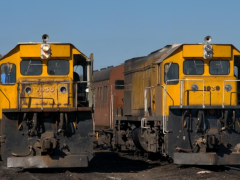
Rail links formed a central focus of the 2010 annual general meeting of the Maputo Corridor Logistics Initiative (MCLI) held on the historic Maputo railway station platform in September this year. For the first time in the MCLI’s seven years of existence, all three rail partners – from Swaziland, South Africa and Mozambique (CFM) – were represented at the AGM. Gideon Mahlalela, CEO of Swaziland Railway, said the role of transport service providers, and rail in particular, was to ensure accessibility, affordability and availability to help drive down Africa’s relatively high logistics costs. Rail efficiency had to be improved, and new models of financing infrastructure were being sought to ensure the long-term sustainability of rail and its competitiveness in the future. Rail should “over-promise and over-deliver” if it is to transform its current status quo and become a facilitator of economic growth and investment. Tau Morwe, acting chief executive of Transnet Freight Rail, said little of the R100-billion investment planned by the parastatal over the next five years was allocated to the Maputo corridor, and urged the MCLI to lobby for some of the investment to be redirected to the corridor. He added that this was the first time that TFR had come on board with the other rail partners which, he said, showed the commitment of the organisation to working with CFM and Swaziland Railway to ensure continued growth. The three organisations were jointly working on various interventions to ensure increased regional trade, he said. Miguel Guebuza, speaking on behalf of the chairman of CFM, Rosario Mualeia, said the corridor represented an integration of peoples, countries and cultures. Some 14 countries were represented at the meeting, which attracted over 500 delegates. He said the common goals of the three rail service providers were to facilitate the movement of people and goods between the borders and to eliminate unnecessary bureaucracy. The rail theme continued in the joint report by MCLI co-chairpersons Mathews Phosa and António Matos. They began their report with the announcement that all the rail partners had now joined the MCLI as Key Members (or funding members), which would include them in the decision making on the strategic direction of MCLI. Phosa welcomed Swaziland Railway into the MCLI community and said stakeholders had been waiting a very long time for this.
Maputo corridor pushes rail to reduce logistics costs
Comments | 0
© Now Media. This content is protected by copyright and may not be adapted or republished. If you would like to discuss cooperation opportunities, please contact: editor@freightnews.co.za.