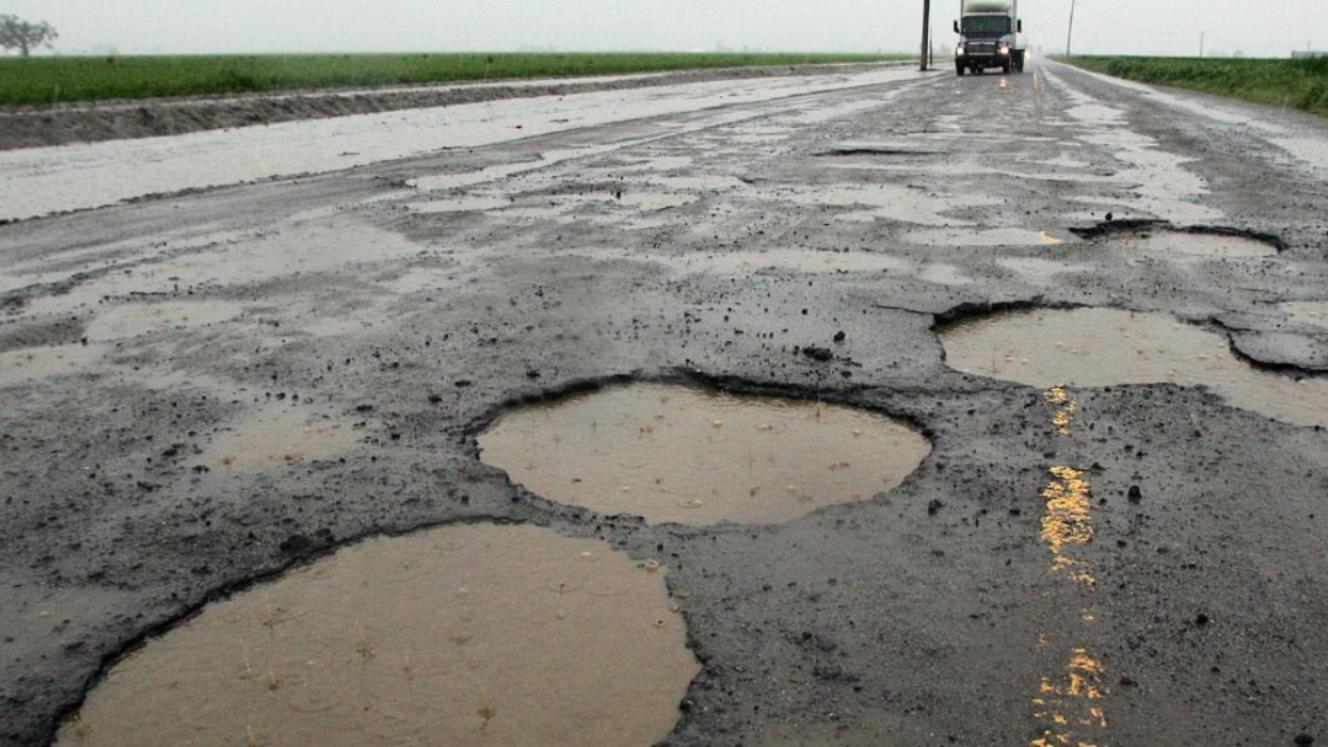
Minister of Public Works and Infrastructure, Dean Macpherson, has signed a memorandum of cooperation with Agriculture SA (AgriSA) and the Agricultural Business Chamber to form a partnership to improve critical road infrastructure in the Free State.
MEC for Public Works and Infrastructure Kathleen Dibolelo Mance, head of Infrastructure South Africa Mameetse Masemola, Agricultural Business Chamber CEO Theo Boshoff, and Agriculture South Africa CEO Johann Kotzé participated in the signing of the memorandum at the Peritum Agricultural Institute in Bloemfontein at the weekend.
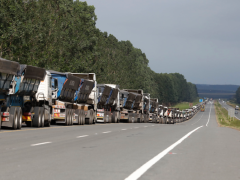
The agreement establishes a structured framework to identify and prioritise rural road corridors that carry high volumes of agricultural freight and have significant economic impact, and which should therefore be prioritised for maintenance and improvement.
Macpherson said the initiative, which was born out of conversations with Boshoff and Kotzé at the National Maize Producers' Organisation conference, last year, would play an important role in supporting farmers in the province.
He said the initiative would use data supplied by AgriSA and Agbiz to identify high-volume corridors where investment would have the greatest impact, in a bid to help drive economic growth and sustain job creation.
“With this initiative from Infrastructure South Africa, in partnership with AgriSA and Agbiz, we will be able to calculate the economic impact of roads that carry high volumes of agricultural output in the Free State, and demonstrate how much costs can be reduced if those roads are improved or rehabilitated,” Macpherson said.
“This will help all spheres of government direct infrastructure investment towards roads with the greatest potential to reduce logistics costs for farmers, which in turn will help lower costs for consumers,” Macpherson said.
He added that as the breadbasket of South Africa, the Free State was the ideal location to pilot the programme in support of farmers and to improve the efficiency of their operations.
“We thank the provincial government for its collaboration and support as we implement this programme. We know that if farmers succeed, South Africa succeeds, and we believe this pilot is a critical first step in ensuring that farmers have the infrastructure necessary to thrive,” he said.
By identifying high-volume agricultural corridors and prioritising them for intervention, the partnership will ensure that the country’s limited public resources are directed where they provide the greatest benefit to farming communities.
“When rural roads fail, farmers carry the burden first. Higher transport costs reduce profitability, limit reinvestment into farms, and ultimately threaten the sustainability of agricultural businesses. Supporting farmers means fixing the infrastructure that underpins their operations so that we can meaningfully grow the economy and create much-needed jobs,” Macpherson said.