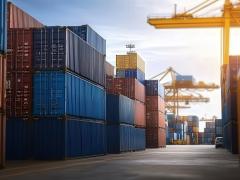
With mine productivity dropping to new lows in 2014, mining companies have been taking long hard looks at the big contributing factors in an effort to get the industry back on track. The costly role of logistics in Africa, however, has been hard to ignore and in some cases the decision to close shop has been far wiser than trying to find cost-effective logistical solutions that will allow the commodities to be moved off the continent. “Mining houses across the world are not immune to volatility,” says Paul Runge, managing director of Africa Project Access. “There are some very real issues at play, with the weaker commodity prices and increased production costs being two of the biggest issues. In Africa logistical issues add significantly to the cost.” He says in the case of Mozambique, where big mining houses have just about sold up all of their interests in what was initially expected to be very lucrative coal-mining, logistics played a definite role. “Huge amounts of coal would have to be moved out, the transport system is very unreliable and the ports at present just don’t have the capacity to do so. Another factor is the annual monsoon season that requires very good infrastructure to be put in place to withstand the heavy rains,” said Runge. “Taking into account the logistics infrastructure required and the cost in light of the drop in the coal price, it becomes understandable that companies have decided to opt out.” Runge says often each particular project must be looked at individually. “In the case of Mozambique, Rio Tinto decided to pull out but is now making big noises in Guinea in what will be just as difficult a project in terms of logistics. It’s about whether the investment into the logistics makes economic sense in the long run.” According to Lars Greiner of Greiner Mendi Associates, there are definite minimum infrastructure requirements before any project can kick off. “Logistics is a big factor and plays a contributing role to the success of any project - especially in Africa where mines are often remote and where infrastructure in terms of roads, rail and ports is often lacking.” Runge says with the major oil and gas finds on the continent it is getting harder to divorce this sector from traditional mining and there seems to be a willingness to invest in the necessary logistics for these two commodities. “The picture is also slightly different in that one does not need the same kinds of resources. For gas, for instance, one does not need an effective rail system,” says Runge, who maintains that logistics in the long run will be the game changer in the African mining sector. “Get the logistics right and you stand some chance of success. Get it wrong and there is no way you can succeed,” he says, be this traditional mining or oil and gas. But spending on logistical requirements is costly. “Building the necessary infrastructure is one thing, but when you take into account the economic environment in which many of these mines are operating then it becomes questionable,” says Duncan Bonnett of Whitehouse & Associates. “Commodity prices have dropped and analysts are forecasting that prices will not recover within the next three to four years. Investing in the evacuation of these minerals is costly in light of higher input and operational costs – with the very real possibility of lower returns. As a result companies are becoming less and less willing to invest in the infrastructure.” INSERT & CAPTION 1 Get the logistics right and you stand some chance of success. Get it wrong and there is no way you can succeed. – Paul Runge INSERT & CAPTION 2 There are definite minimum infrastructure requirements before any project can kick off. – Lars Greiner
Logistics will be the game-changer in African mining sector
Comments | 0
© Now Media. This content is protected by copyright and may not be adapted or republished. If you would like to discuss cooperation opportunities, please contact: editor@freightnews.co.za.