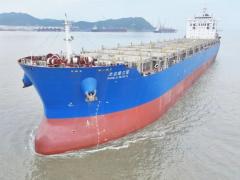
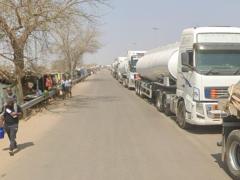
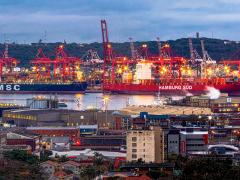
South Africa’s logistics costs, at a staggering R317 billion per annum, are growing year on year making intervention not just necessary but critical. At 15.9% of the country’s GDP, pressure to reduce logistics costs is now even more acute than ever before in light of the global economic meltdown. These were some of the findings of the fifth State of Logistics Survey conducted by the Council for Scientific and Industrial Research (CSIR) and Imperial Logistics. Launched in Johannesburg last week, the survey – aptly titled ‘Logistics value and cost drivers from a macro and micro-economic perspective’ – found that transport and inventory carrying costs were on an alarming upward trend even when real increases are considered. Said Hans Ittman, executive director of CSIR Built Environment: “Transportation costs are now measured at 53% of total logistics costs, 14% higher than the world average at 39%. Being far away from all our sources of imports, still relying heavily on transport via road versus rail together with a significant increase in inventory costs, stakeholders in the industry need to constantly evaluate their costs closely, collaborate with peers and be determined to find best cost options.” According to Abrie de Swardt, marketing director of Imperial Logistics, the rapid increase in logistics costs is an issue of concern. “We cannot continue with this trend – there are too many trucks on the road.” Ittman agreed, saying containers needed to be on rail. “Road and rail have to work together for Team South Africa. But we cannot continue moving 196 million tons on the corridors alone on road.” Elvin Harris of Transnet Freight Rail, who joined in a panel discussion on the survey, said much had been done to entice cargo back to rail. “We have seen massive capital investment in the past five years which is upgrading the infrastructure. New locomotives and wagons have been purchased and we are looking at improving our operations – already we have increased the trains on the various corridors and also reduced the travelling time, making it a faster service.” He said there was no denying more needed to be done, but the survey was proof enough that there was a need for a reliable railway network in the country. Also commenting on the effect of worsening road conditions and the necessity for a green supply chain, De Swardt said the survey was not all about doom and gloom. “Much of what we are doing in this country is of world class. It is about harnessing and improving that and being internationally competitive.”
Logistics survey adds impetus to rail push
Comments | 0
© Now Media. This content is protected by copyright and may not be adapted or republished. If you would like to discuss cooperation opportunities, please contact: editor@freightnews.co.za.