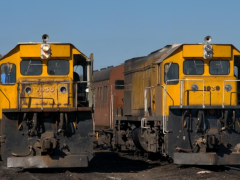
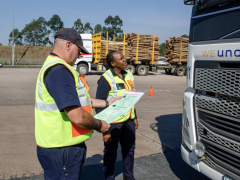
South Africa’s import profile is shaped by far more than global trade flows. According to industry experts, structural issues ranging from logistics costs and infrastructure constraints to regulatory complexity and limited beneficiation continue to influence the country’s dependence on imported inputs across key industries. According to Andile Africa, CEO of the Automotive Industry Development Centre (AIDC), logistics costs remain one of the largest cost drivers in South Africa’s automotive value chain. Using the Ford Ranger as an example, he noted that producing the same vehicle in Thailand costs roughly half as much as in South Africa. Speaking during a panel discussion on the development of regional value chains at the Infrastructure Africa conference, which recently took place in Cape Town, Africa explained that value chains ultimately became visible at sector level, where the depth and competitiveness of the regional supply base determined whether industries relied on local inputs or imports. Southern Africa is often compared to countries such as Thailand, which has followed a similar development path and has built a strong automotive manufacturing base. “One of the big input costs is SA Import Trade FN25M0184 logistics,” he said, indicating that efficient rail infrastructure was particularly important for the automotive sector, given that much of South Africa’s manufacturing activity is concentrated in landlocked Gauteng. “We need rail to move goods to the coast for export and components to the hinterland for manufacturing. Generally, rail is cheaper than road.” Labour costs also play a role, particularly when linked to productivity levels. According to Africa, Thailand has implemented productivity-linked remuneration systems where workers are rewarded based on output and quality, contributing to higher competitiveness. Material costs are another factor shaping the import profile of the sector. Although southern Africa is rich in mineral resources, many of these resources are exported in raw form rather than processed locally. “We are one of the largest producers of iron ore, which is critical for steel production, yet much of the automotive- grade steel used to manufacture vehicles in South Africa is imported,” he said. According to Coenraad Bezuidenhout of Maverick Shared Value, localisation policies must be carefully designed if they are to reduce import dependence without raising costs for industry. “Localisation can strengthen value chains when it reduces logistics delays and foreign exposure, allowing local firms to learn and scale quickly,” he said. However, he warned that decisions in the private sector were often driven primarily by upfront cost considerations, which can favour cheaper imports even when longer- term risks are not fully considered. Bezuidenhout cited examples from the structural steel sector where companies opted for lower-cost imports without accounting for the implications if products arrived late or failed to meet required specifications. “If goods arrive and they are not to specification, sending them back can create significant delays and additional costs,” he said. He warned that poorly designed localisation policies could also become counterproductive if they simply protected inefficient producers. “Localisation becomes a tax when it protects low productivity and raises costs without a clear justification,” he said. Instead, he suggested that localisation programmes should be time-bound, benchmarked and conditional, with suppliers required to meet quality and performance standards. He added that technology and better measurement tools could play an important role in monitoring supplier performance and ensuring that localisation efforts delivered real capability rather than protectionism. LV
Localisation policies must not foster protectionism
Comments | 0
© Now Media. This content is protected by copyright and may not be adapted or republished. If you would like to discuss cooperation opportunities, please contact: editor@freightnews.co.za.