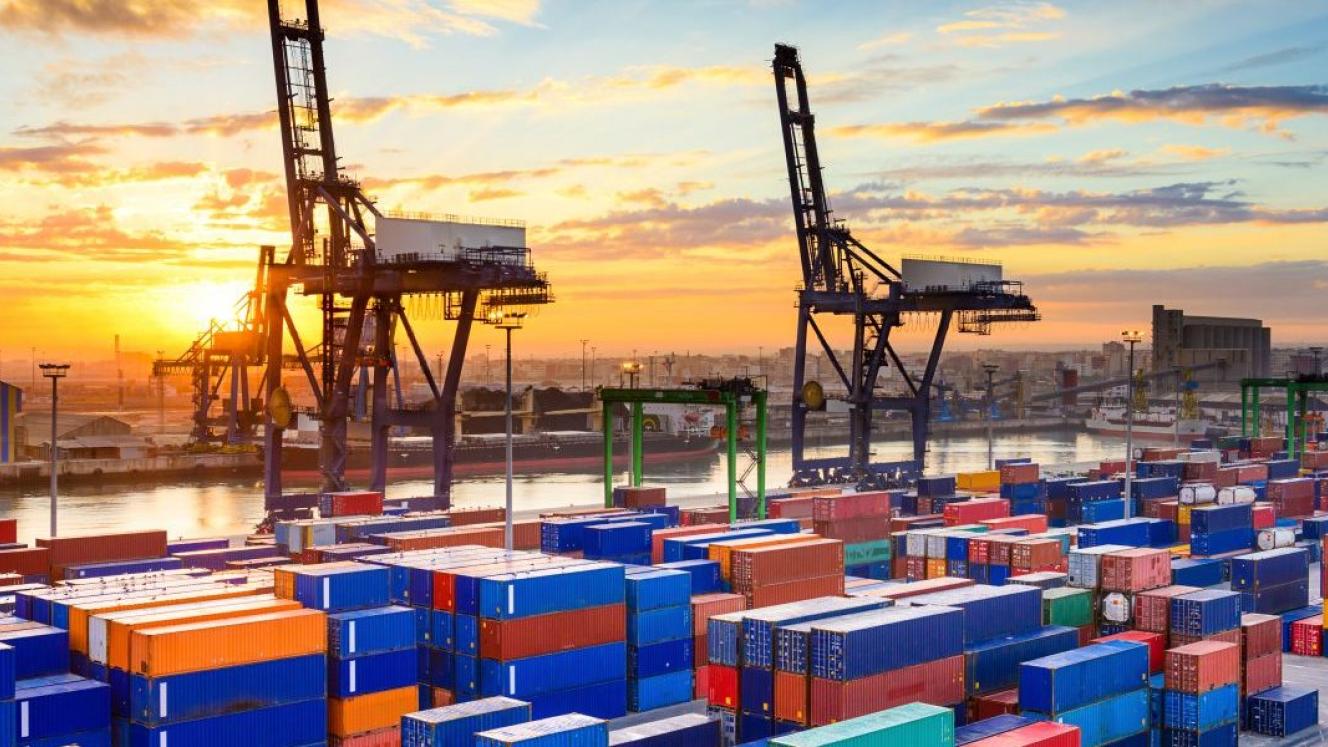
'Ports remain inefficient in world terms' Trevor Law É 'When I am paying 31,5% more in port dues and getting the same poor service I have a problem.' Ray Smuts BUDGETS ARE vital in shipping but determining one with reasonable accuracy is difficult indeed "when Portnet is a factor", says Trevor Law, general manager for LauritzenCool Southern Africa. While pleased with the company's overall performance this past season, he is not at all enamoured of National Ports Authority's performance, particularly in the Port of Cape Town. It has to his mind been an exercise in frustration with countless meetings - name them and he's met them - amounting to nothing. "The lines and the customers are starting to get to that level, to a point we feel all our requests are falling on deaf ears," says an exasperated Law. "Problems faced by the authorities in the Port of Cape Town particularly are a a shortage of equipment, a lack of maintenance and repair. "Right now we have a problem with marine services in Cape Town and I think what is needed is more tugs and another pilot boat. "They also need to resolve shift change issues and look into a helicopter-type service for pilots as is the case in Durban, but then they will probably say it cannot be justified as Cape Town has fewer vessels than Durban." Pointing to LauritzenCool's regular tight schedule, Law says the company does not mind paying for operational efficiencies because a ship able to sail 12 hours early effects a saving of around $6 500. "But when I am paying 31,5% more in port dues and getting the same poor service I have a problem. "For us to lose up to $3 000 a ship here on our coast week in, week out, is not unheard of and who do I bill for that? "We remain inefficient in world terms as we load a pallet at an average rate of 25 per gang per hour per crane at the MPT whereas the ratio in other parts of the world is between 50 and 70." Law says that while there is consensus that container volumes are on the up and up, it remains a fact that the lines are having to contend with a lack of new equipment, and poorly maintained existing equipment, and also the imposition of a new cargo dues structure. What the latter boils down to, is that if one were to put a pallet into a container the amount due would be something of the order of R76 whereas that selfsame pallet transported as reefer conventional inside the ship would cost R13. "That amounts to a saving of about $5 and if you consider that our average ship loads 5 300 pallets it means we are saving $260 000 per ship." l Transnet's results for the year ended March 31 2002 break down, for the first time, the individual performances of the National Ports Authority and South African Port Operations, revealing that NPA showed a net profit of R2,191 billion on a turnover of R3,690 billion and Sapo a profit of R67 million on a turnover of R1,875 billion.
Lines' requests fall on deaf ears Ð Law
Comments | 0
© Now Media. This content is protected by copyright and may not be adapted or republished. If you would like to discuss cooperation opportunities, please contact: editor@freightnews.co.za.